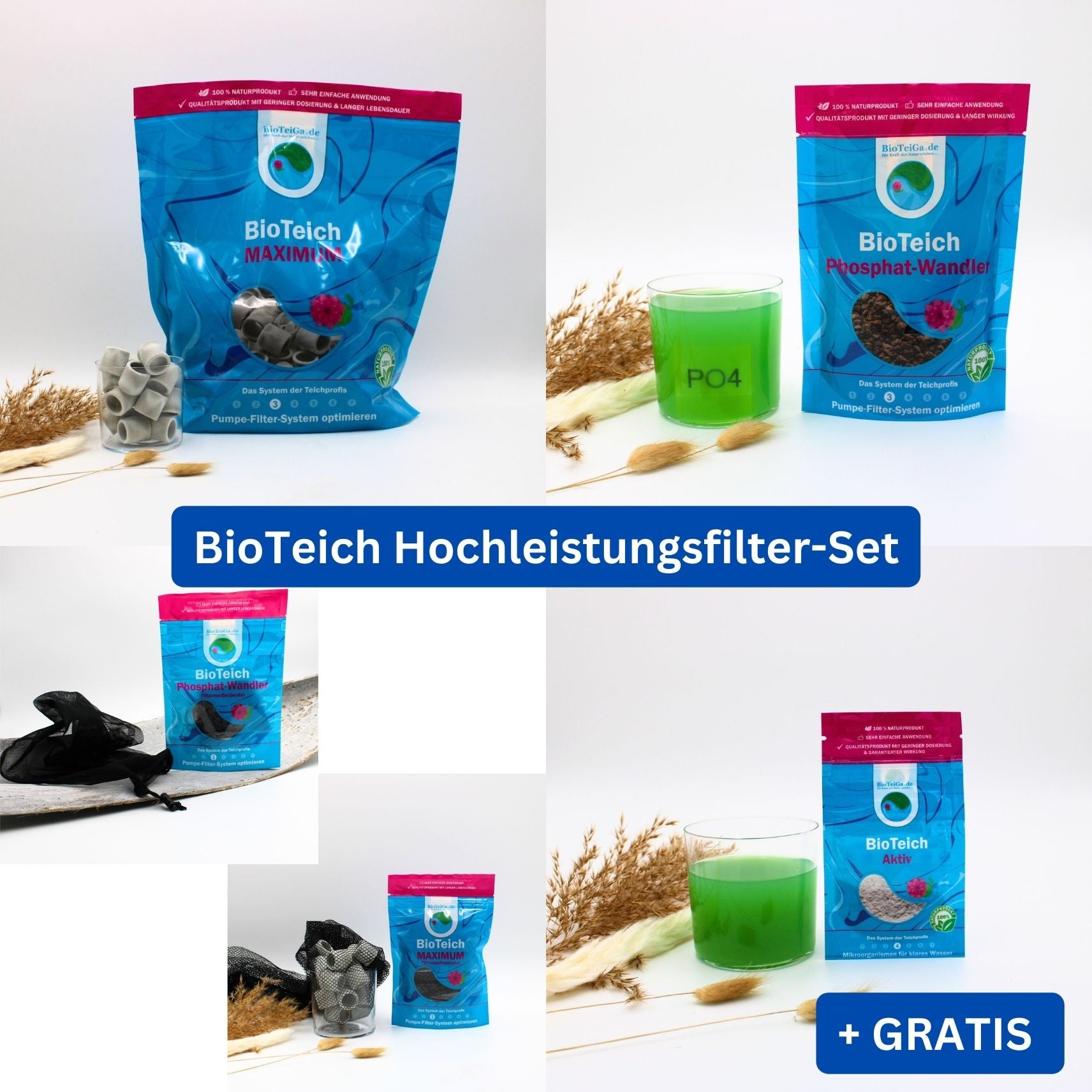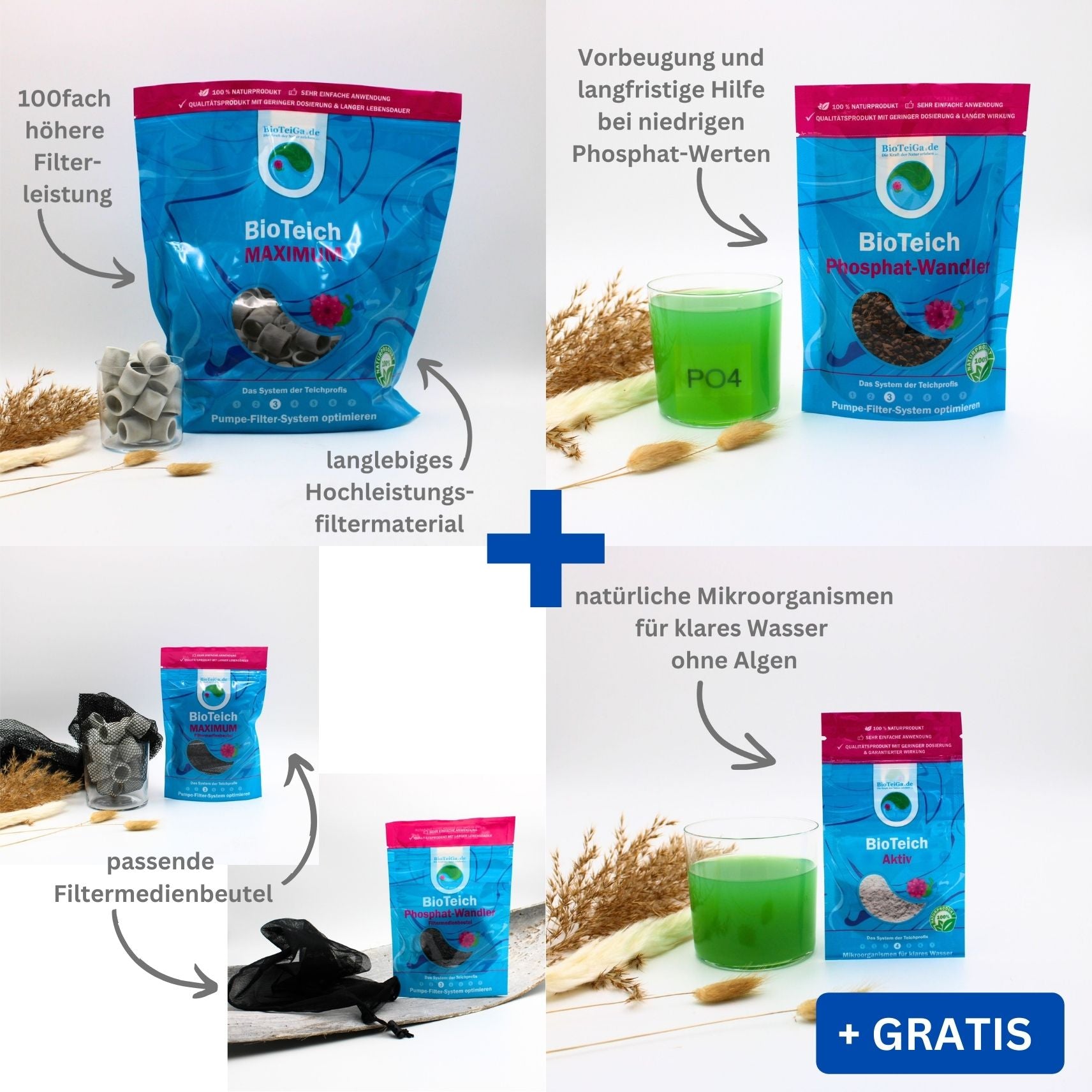

Permanently resolve the causes with BioTeiGa, save time, and finally enjoy your pond!

Are you frustrated because your pond never looks the way you want it to? Have you already tried everything to control excessive algae growth? Do you even feel like a "slave to your pond"?
Stop wasting your precious time! Benefit from the BioTeiGa system now and bring your pond into biological balance. In the future, you’ll only need to spend 20 minutes a month on your pond, which will finally become a true eye-catcher in your garden.
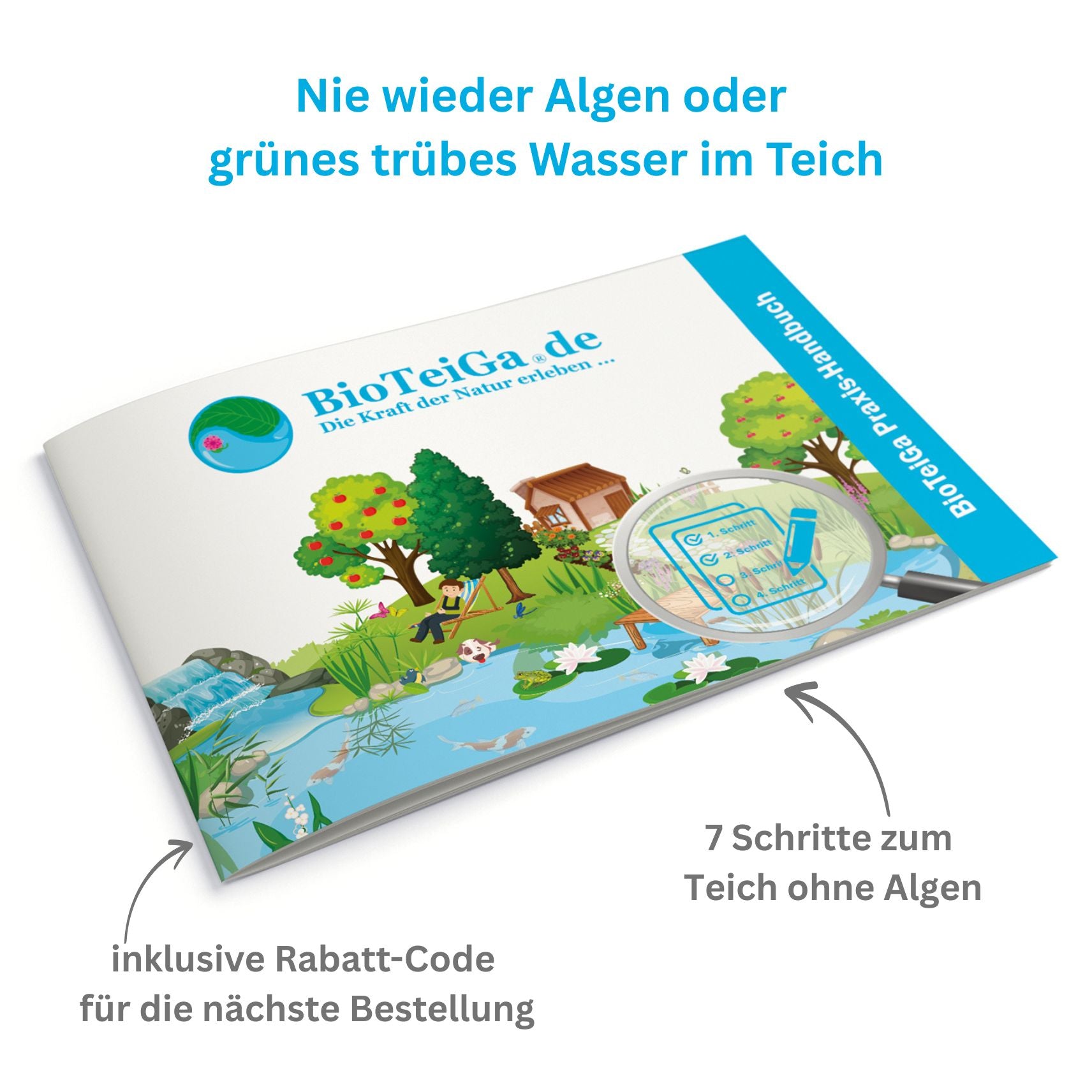
7 Simple Steps to Your Dream Pond Without Algae
Sounds too good to be true? That’s what many pond owners thought too, who were previously disappointed by other solutions. Now they are "convinced users" and part of the more than 50,000 BioTeiGa regular customers.
Algae Are Important
In pond water, there are more than 100 different types of tiny algae spores. They produce oxygen and make an important ecological contribution. However, excessive algae growth quickly becomes a problem for the entire pond, as a dense algae mat deprives other pond inhabitants of their livelihood or turns the entire pond water green and cloudy. Common algae killers for filamentous or suspended algae do not lead to long-term success.
Instead of resorting to the "chemical club," the causes of algae growth should be addressed, and then the pond should be brought into biological balance with natural products.
When Algae in the Pond Become a Nuisance
A dense algae mat not only looks unsightly but can also lead to the death of aquatic plants and animals.
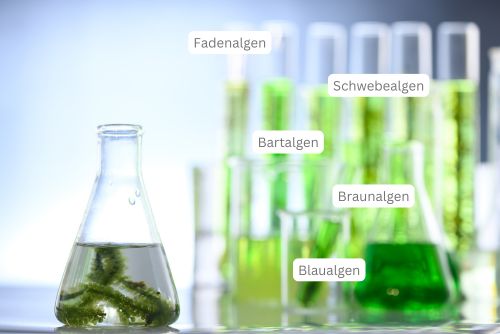
The following types of algae are particularly troublesome for pond owners:
- Filamentous algae can be recognized by their elongated, thread-like structure. They can grow several meters long, form a mat on the pond surface, and settle between aquatic plants. They may also cling to the bottom or walls of the pond like a furry layer.
- Suspended algae belong to the green algae family. Like filamentous algae, they primarily appear in spring and summer. Sunlight and warm temperatures lead to algae blooms, turning the pond water noticeably green. Due to their microscopically small size, suspended algae are difficult to remove with conventional filtration systems.
- Beard algae belong to the red algae family. They form a flowing beard in the water and make the pond appear reddish and cloudy.
- Brown algae usually settle on the pond walls but can also affect stones and aquatic plants. They require little light and nutrients and are therefore particularly stubborn.
- Blue-green algae are not actually algae but microorganisms from the cyanobacteria family. They form thread-like or fluffy colonies and are visible near the shore as a slimy mat. That’s why they are also called smear algae. Blue-green algae produce toxins that can be dangerous to humans and animals in high concentrations.
Why Conventional Algae Control Methods Fail
Those who notice excessive algae growth in their garden pond often resort to chemical algae killers. However, the chemicals further disrupt the biological balance of the pond. As a result, a new algae bloom occurs after a short time.
Many pond owners also use UVC lamps, which prevent single-celled organisms from dividing and thus reproducing. UVC light can significantly reduce the number of pathogens in the water. However, if UVC light destroys single-celled suspended algae, the micro-nutrients stored in the algae are released back into the pond water, while important minerals are burned. This changes the nutrient ratio in the pond water, which in turn promotes the spread of other algae types like filamentous algae.
Some pond owners hope to curb algae growth by vacuuming pond sludge. However, sludge vacuums stir up the nutrients contained in the sludge, which can then be absorbed by the algae.
Long-Term Algae Control in the Pond – With Natural Methods
With the BioTeiGa system, you can combat algae growth in the long term and naturally. The first step is to analyze the water quality. If the water values are out of balance, this promotes algae growth. Phosphate and nitrate in particular serve as nutrients for algae.
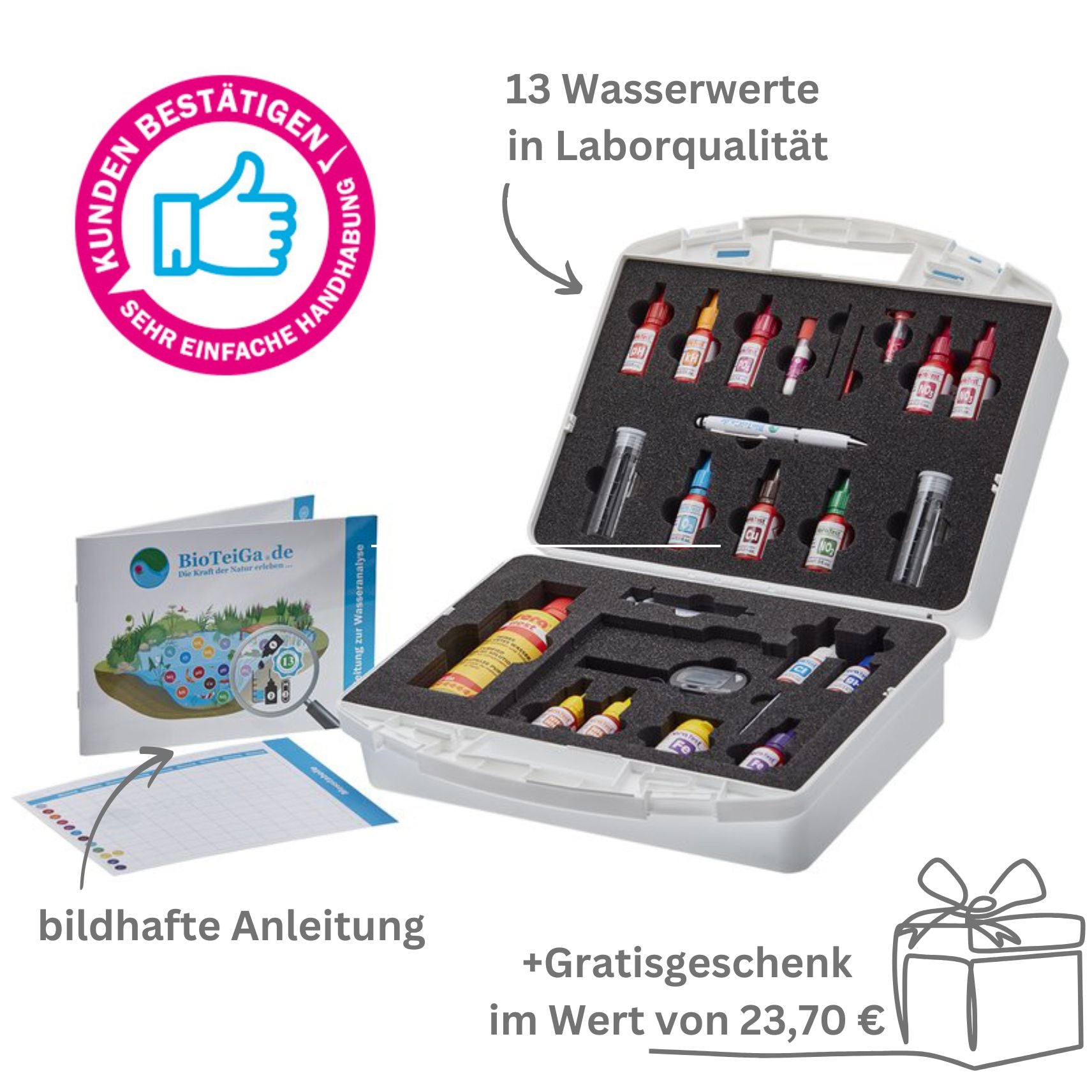
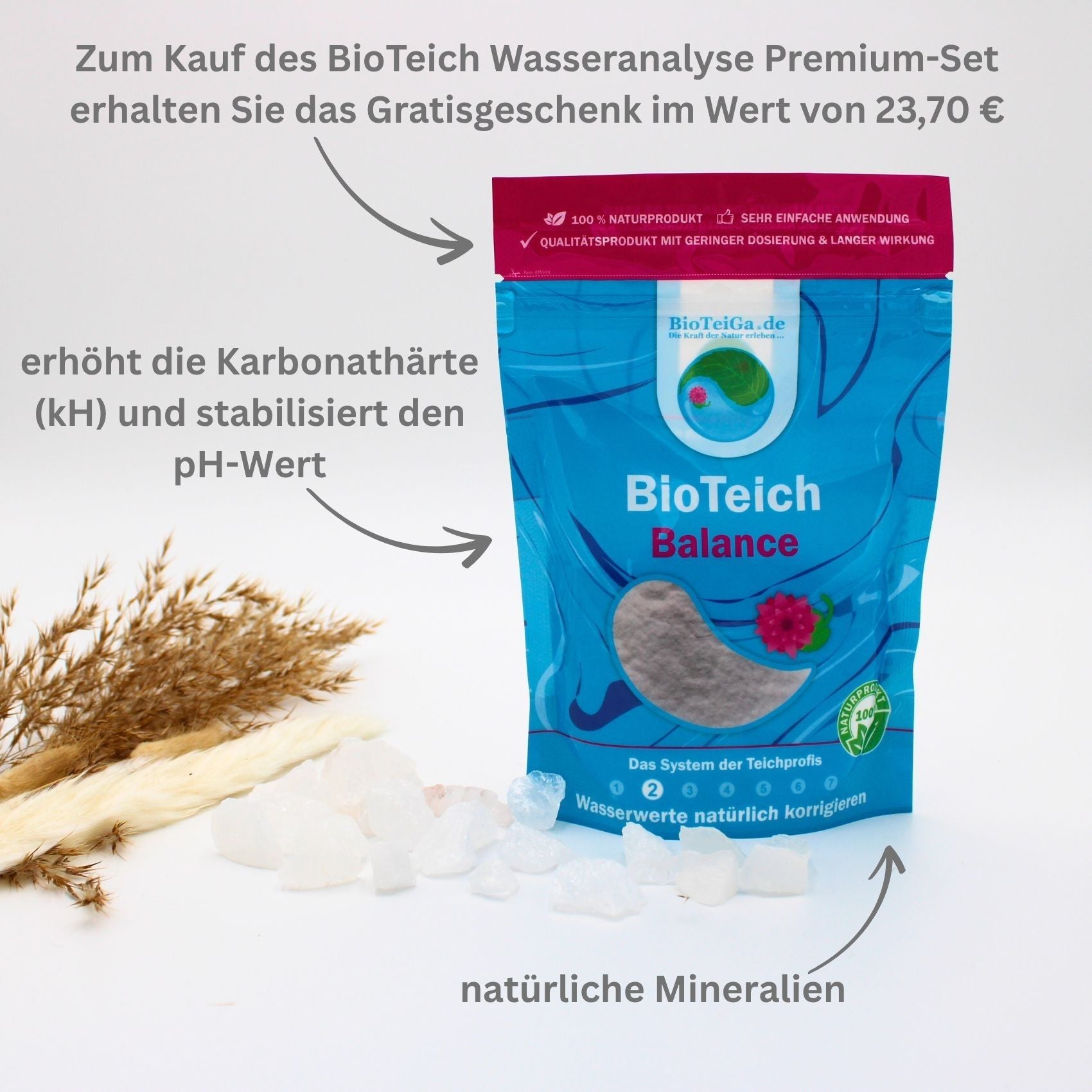
With a phosphate content of more than 0.035 milligrams per liter, strong sunlight, and warm water temperatures, algae spores spread explosively, leading to the so-called algae bloom. With the BioTeich Water Analysis Premium Set, you can determine the exact composition of the pond water.
If you detect a high phosphate content, you can neutralize it with our natural product BioTeich Phosphate Acute. To combat high nitrate levels, use BioTeich Nitrate EX. This way, you deprive the algae of their most important food sources.
The BioTeich Filamentous Algae Dissolver Treatment uses biological processes and active ingredients to combat filamentous algae while increasing the mineralization of the pond water. The water values stabilize, leading to the dissolution of the algae.
How to Prevent Algae Blooms
With various preventive measures, you can ensure that algae blooms don’t occur in the first place. Here’s an excerpt from our BioTeiGa Practical Handbook on the topic "Never Again Algae in the Pond."
1. Check if rainwater can flow into the garden pond.
Rainwater flowing over lawns and slopes into the pond changes the carbonate hardness and nutrient ratio of the pond water. Phosphate- and nitrate-containing fertilizers can also be washed into the garden pond this way. A narrow infiltration trench around the pond catches the rainwater before it can enter the pond.
2. Enrich the pond water with microorganisms.
Microorganisms feed on pollutants in the water, are the most important nutrient competitors for algae, and contribute to a healthy nitrogen cycle. A healthy content of microorganisms therefore limits algae growth. To enrich your garden pond with microorganisms, use our microorganism mixture, such as BioTeich Aktiv.
3. Use pond plants to combat algae.
Aquatic and underwater plants remove the nutrients from the pond water that algae need for growth. However, pond soil and pond plant fertilizers can also contain phosphate and nitrate. As an alternative to conventional pond soil, we recommend BioTeich VitaTon, which contains no nutrients and "magnetically" attracts the water-soluble nutrients in the pond water.
4. Choose natural fish food.
Phosphate and nitrate also enter the garden pond through fish food. To keep the pond in biological balance, no more than 1 kg of fish should live in 1,000 liters of water. Choose as natural a feed as possible with probiotic ingredients that can be completely utilized by the fish and does not contain additional nutrients for algae. We recommend BioTeich Probiotic.
For more useful tips on the topic "Never Again Algae in the Pond," check out our BioTeiGa Practical Handbook "7 Simple Steps to a Pond Without Algae."