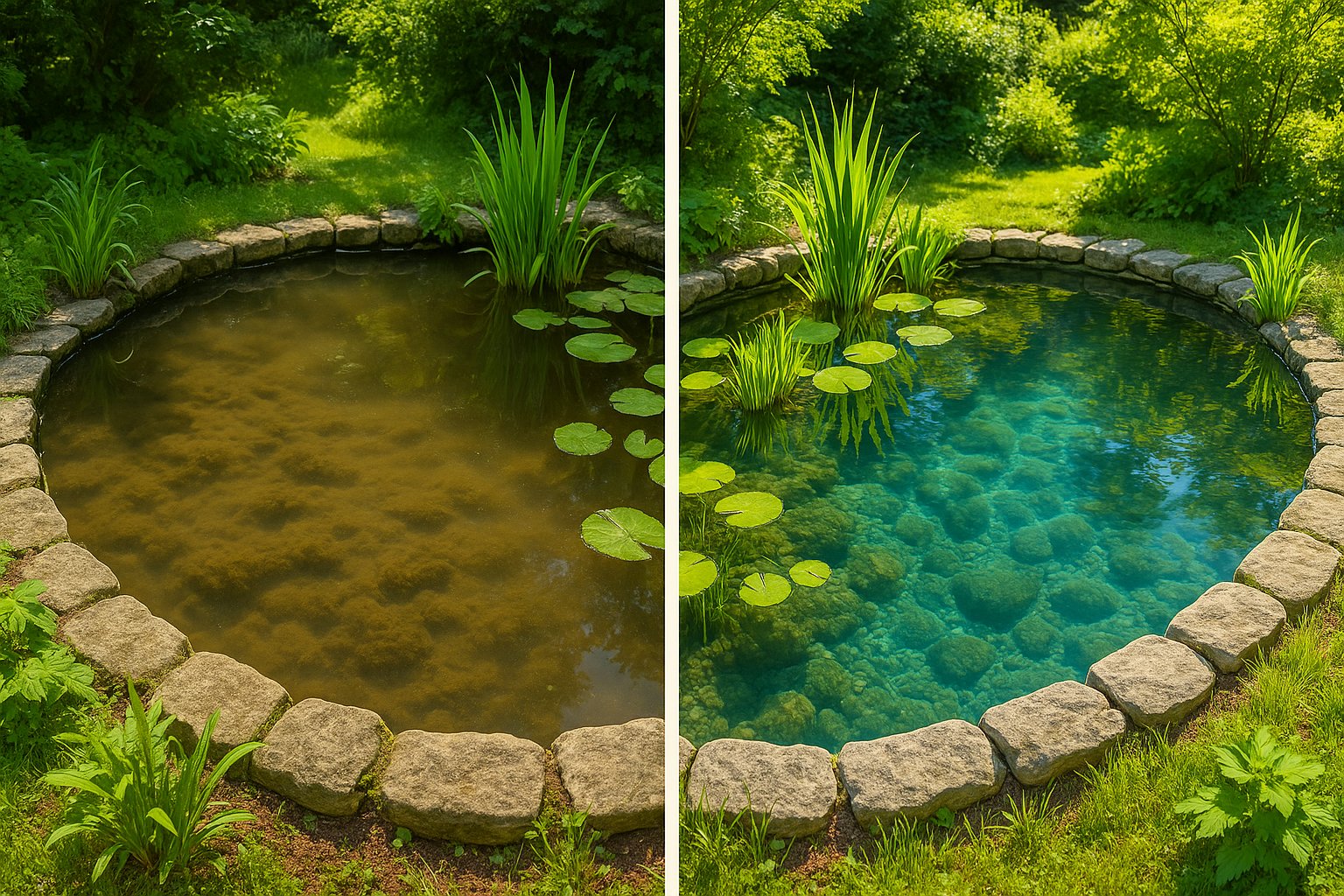
1. How is pond sludge formed?
Pond sludge and deposits between stones and plants are caused by leaves, flowers or pollen, for example. Dead algae, dead insects, bird droppings and - if there are fish in the pond - too much fish food and fish excretions are also among the causes. All deposits sink to the bottom of the pond due to gravity. Natural rotting processes then create nutrient-rich pond sludge. These nutrients encourage the growth of algae. During rotting, putrefactive gases can also cause bad smells and bubbles on the pond surface, so that the pond literally stinks and threatens to "tip over".
2. How do I get the mud out of the pond or how can I remove pond mud?
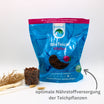
In many places, so-called pond sludge vacuums are used. These are devices that basically work like a vacuum cleaner. As already mentioned above, they can be used to vacuum up the visible layer of sludge, but they encourage the growth of algae by stirring up the invisible nutrients. It is more ecologically sensible to remove the sludge gently using appropriate microorganisms, which are available in the BioTeich sludge removal set, for example.
3. When should you vacuum pond sludge?
Regularly vacuuming the sludge creates a real vicious circle. Nutrients are released and fuel the growth of algae. We only recommend vacuuming pond sludge once, when the layer of sludge is already very thick, ie more than 5 cm high. After that, you can easily use the BioTeich sludge removal set. You only need to spread it on the pond surface every two months.
4. How often do you have to clean a pond?
Only once if there is a high layer of sludge. Otherwise, the BioTeich sludge removal set takes care of the regular removal and prevention of the layer of sludge and deposits on the pond floor.
5. What to do if the pond smells?
If the pond smells, perhaps even like rotten eggs, the cause is usually pond sludge. A thick layer of sludge not only contains nutrients that encourage algae growth. It can also produce putrefactive gases that cause unpleasant odors and bubbles to form on the pond surface. In this situation, you should vacuum the sludge once and then break it down in a gentle and biological way.
6. Why shouldn’t you use a mud vacuum regularly?
A vacuum cleaner removes the sludge, but by stirring up the invisible nutrients it also ensures that they are distributed in highly concentrated form in the pond water. This greatly promotes the growth of algae. Sooner or later, regular removal with a sludge vacuum cleaner will lead to new algae growth and green, cloudy water. We recommend using a vacuum cleaner only once and only if there is a particularly thick layer of sludge.