



6. Pond Plants | Alternative to Fertilizer for Pond Plants
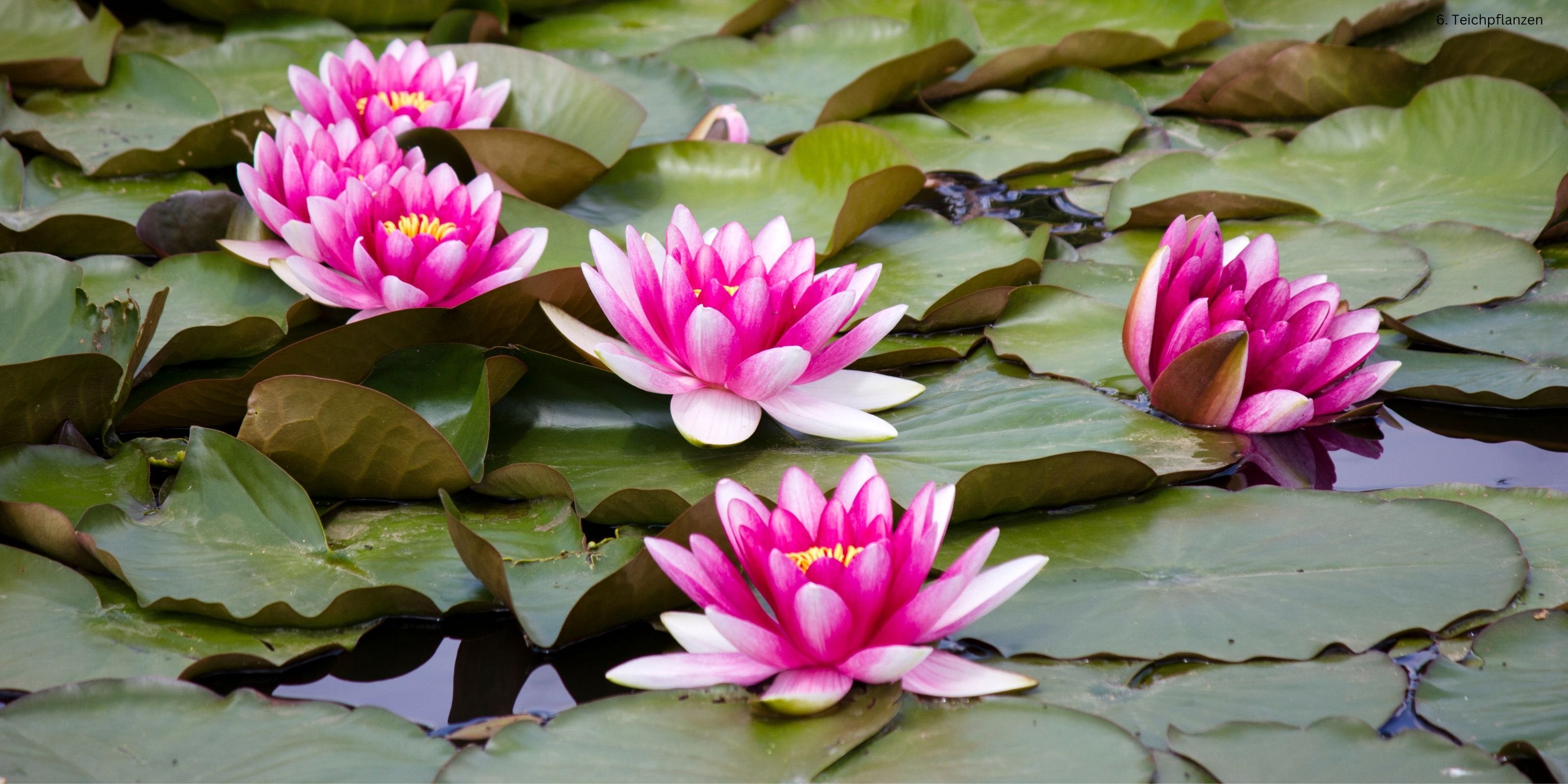
Pond plants create a beautiful appearance and provide a natural habitat for many living organisms. Additionally, they produce valuable oxygen and even reduce algae nutrients. When planting aquatic plants, however, you should avoid nutrient-rich pond soil and substrates, as these greatly promote algae growth in your pond. A perfect solution for optimal nutrient supply without algae fertilizer: BioTeich VitaTon – the best alternative to conventional fertilizer for pond plants.
1 product
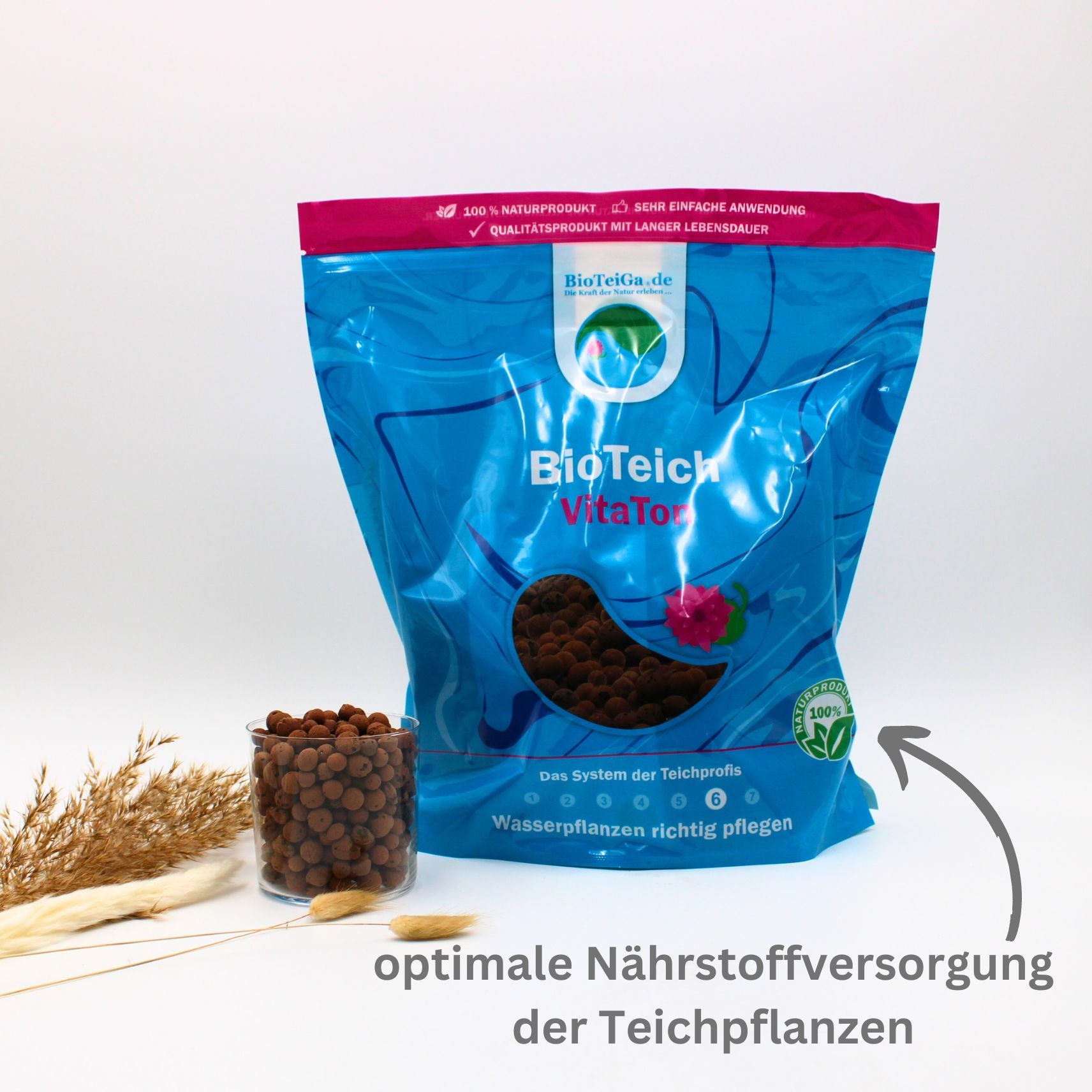
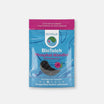
BioTeich VitaTon
🌿🪴 FAQ: Pond plants – the right way to use them without pond soil and substrates with algae fertilizer
Welcome to the special section for optimal planting of pond plants with BioTeich VitaTon – the natural alternative to pond soil and substrate. Here you will learn how to supply your plants with the right nutrients while reducing algae growth.
Why is pond soil problematic?
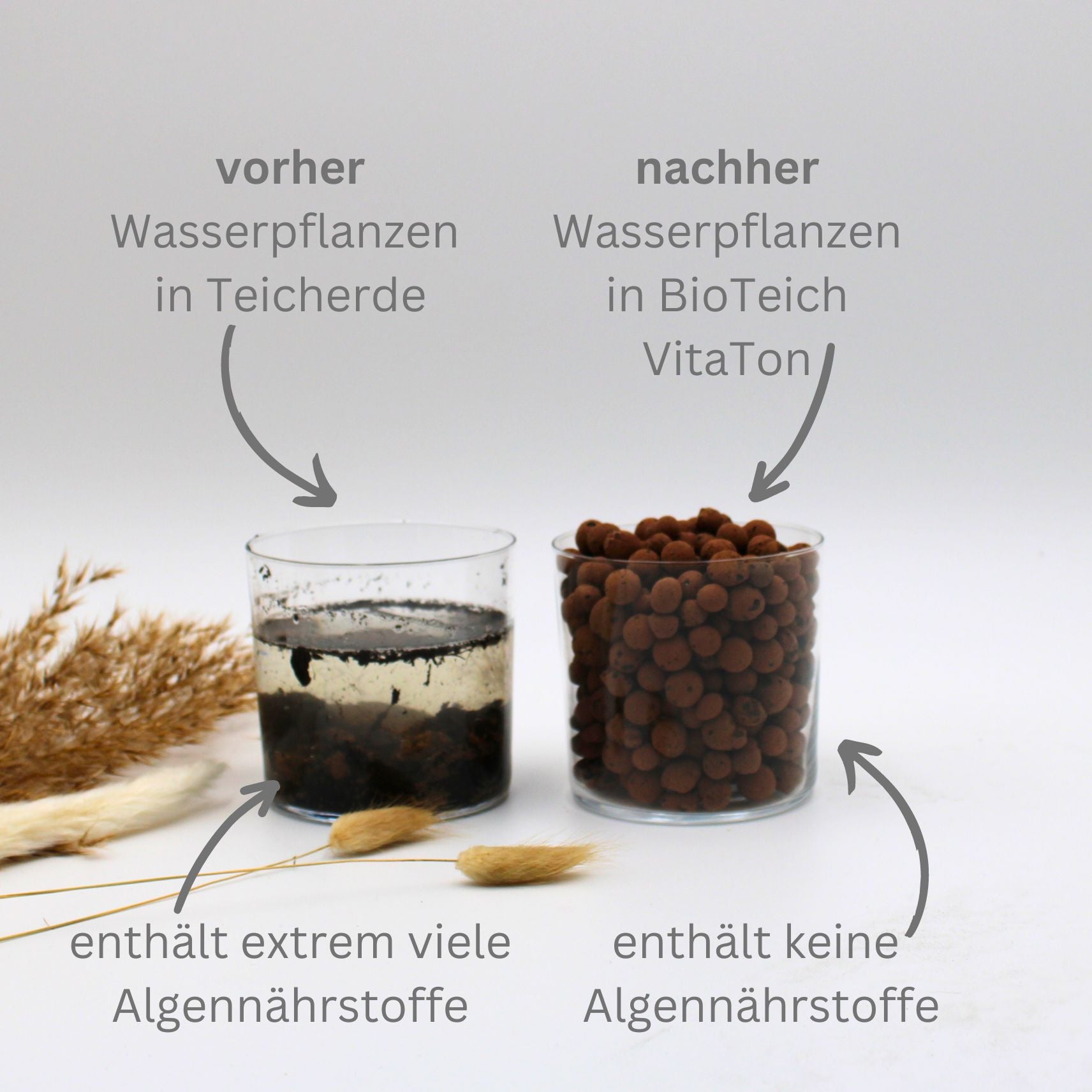
Many pond soils and planting substrates contain excessive amounts of nitrate and phosphate. These can:
- 💥 massively promote algae growth
- 🌫 lead to cloudy water
- ⚫ encourage sludge deposits on the pond floor
Pond plant fertilizers often act where they shouldn’t – namely in the open water.
Our solution: BioTeich VitaTon – for targeted nutrient delivery to the plants and protection against algae formation.
What is BioTeich VitaTon and how does it work?
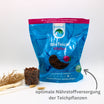
BioTeich VitaTon is a clay-based planting granulate with an extremely fine pore structure. It:
- 🔄 magnetically absorbs excess nutrients from the water,
- 🌿 stores them in a plant-available form,
- 💧 releases them as needed to the roots,
- 🛡 prevents excess release into the water.
➡️ Your plants grow better, algae grow worse.
How do I use water plants with BioTeich VitaTon correctly?
- 🧼 Thoroughly rinse the plant’s roots
- 🪣 Fill the planting basket with 1,000g of VitaTon
- 🌱 Plant centrally and weigh down with gravel/stones
This prevents the clay balls from floating and ensures a firm hold.
Which plant species benefit the most?
- 🌊 Submerged plants such as hornwort or water milfoil
- 🌾 Bog plants such as yellow flag iris, cattails
- 🌸 Floating plants such as water lilies (in a basket)
The more of these species you use, the more nutrients are removed from the algae.
What should I consider for koi or swimming ponds?
With large fish populations (e.g. koi):
- Only use robust plants in the top zone
- No submerged plants – they will be eaten
For swimming ponds:
- Use BioTeich VitaTon in the plant filter zone
- Lower the water level, clean, add VitaTon, plant
- Cover with stones, refill water
Can I reuse old planting soil?
No. Please:
- 🧽 completely remove old pond soil
- 💣 also replace substrates with fertilizing effects such as zeolite or lava
Only this way can you prevent unwanted nutrient return to the water.
What are the advantages of BioTeich VitaTon?
- ✅ Nutrient binding instead of algae fertilizer
- ✅ Natural and chemical-free
- ✅ Ideal for all planting zones
- ✅ Buy once = use forever
- ✅ No more repotting due to algae problems
Reviews
What our customers say
Iris M.
Bioteich VitaTon
Hans-Joachim L.
Bio Pond Vita Ton
Petros S.
Highly effective!
Cornelia K.
very good, but be careful!
Manuela K.
VitaTon - Clean Stuff