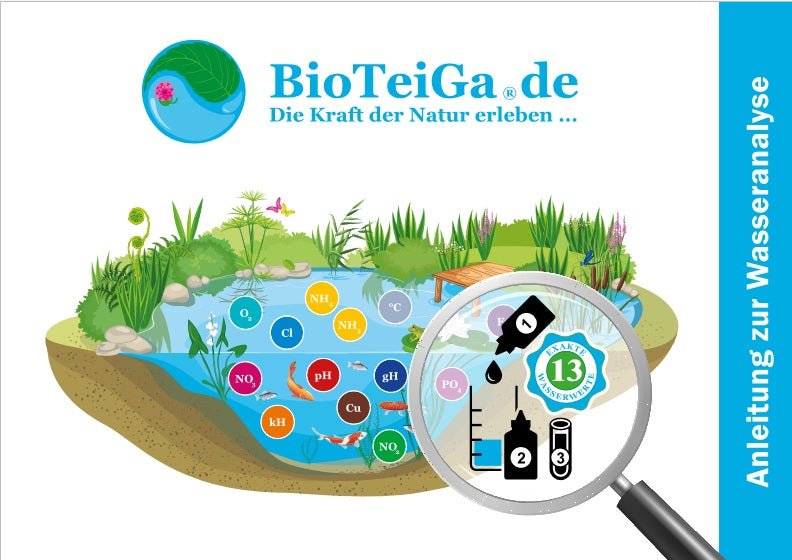

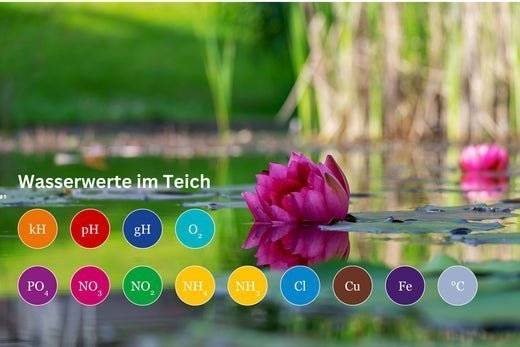
Any water value that is not within the optimal range can also be a cause of algae, green water, sick plants, and sick fish.
These six water values are crucial for the health of your pond and should be recorded with every measurement. They provide insight into the basic water quality and biological balance: pH level, carbonate hardness, nitrate, phosphate, oxygen, and water temperature.
These seven values are optional, but should occasionally be measured as well — especially if your pond shows abnormalities such as green or cloudy water, algae growth, fish diseases, or unpleasant odors: total hardness, nitrite, ammonium/ammonia, chlorine, copper, and iron.
Always enter your pond’s current measurements directly into your personal pond diary. After each measurement, the pond diary automatically calculates a health score for your pond — from 0 to 100. This way, you can immediately see whether your pond is in excellent condition or if action is needed.
For each individual measurement, you can see the current status, the change from the last measurement, and a history of your previous entries. This allows you to identify trends early and react in time.
If a value is outside the optimal range, you will receive a specific recommendation — clearly explained and with a direct link to the appropriate product to help you resolve the issue.
Simply log in to your customer account on bioteiga.de and click on "Pond Values." Enter your first measurement — in less than a minute, you will have set up your pond diary.
pH Level
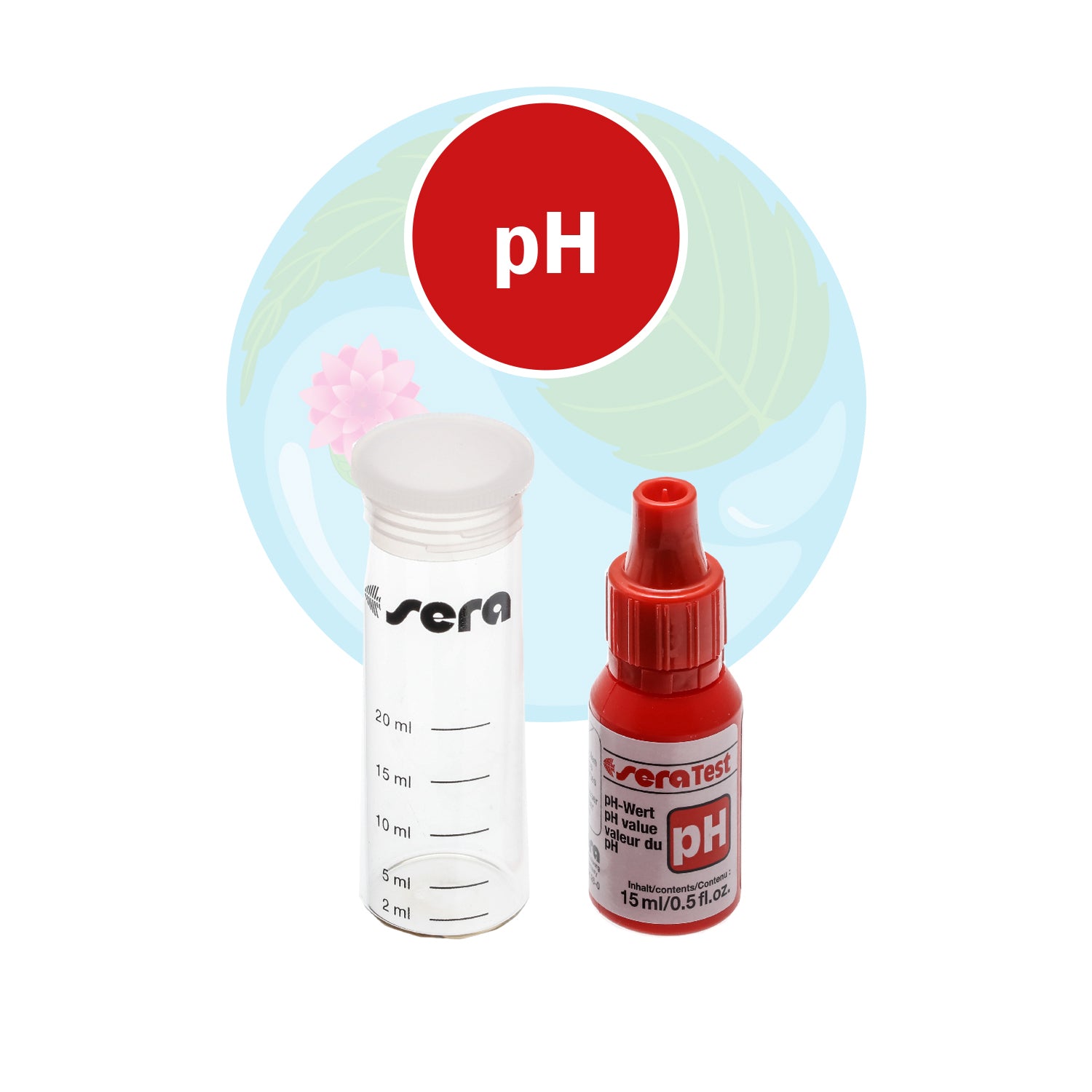
The pH level indicates the acidity of the pond water. If the pH level is not between 7.5 and 8.5, water-purifying processes cannot take place in the pond, plants cannot grow, and aquatic life may become sick.
| pH 0 to 5.5 and 10 to 14 | Resolve causes |
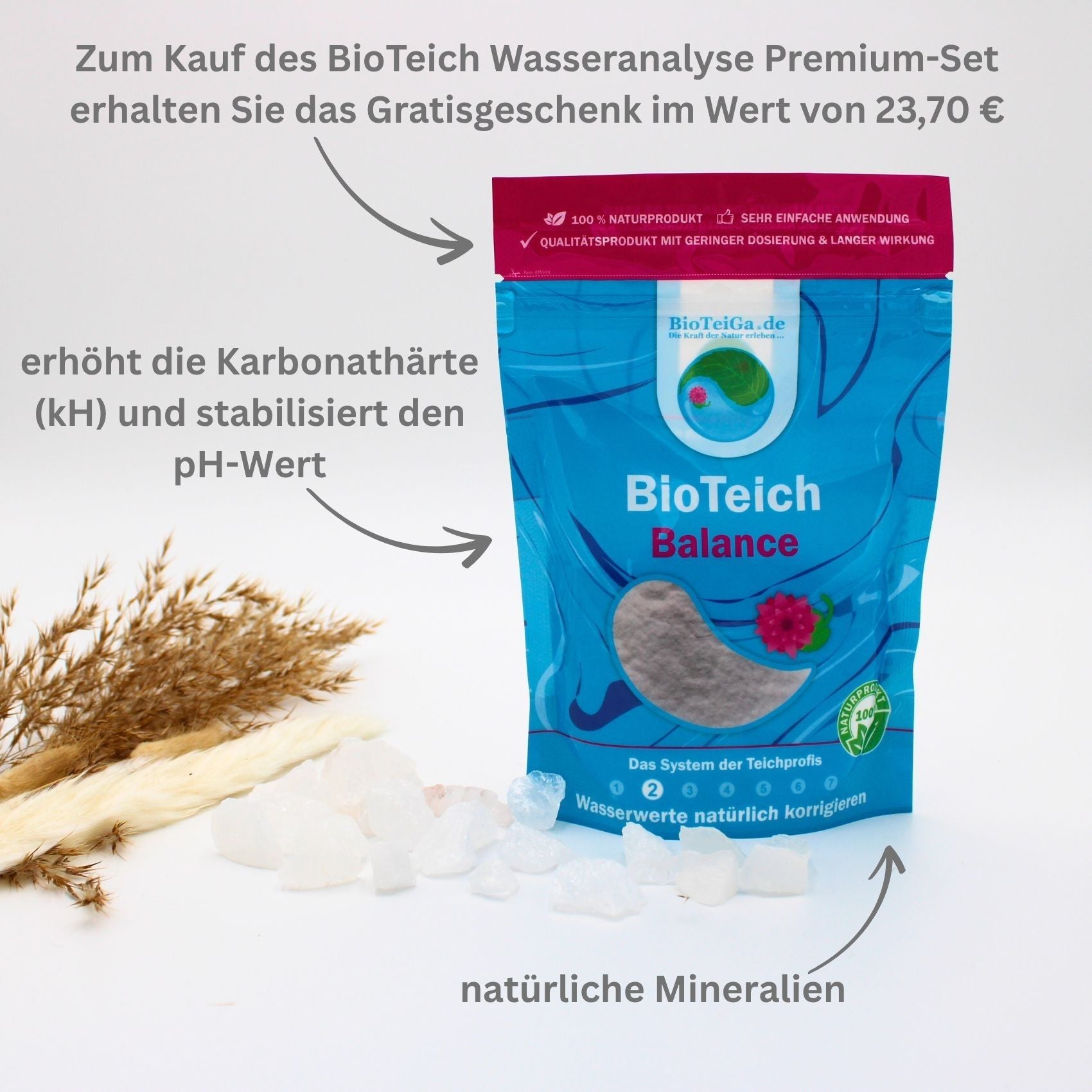
| pH 6.0 - 7.0 and 9.0 to 9.5 | Apply BioTeich Balance |
| pH 7.5 - 8.5 | No action required, but monitor regularly. |
A deviating or even poor pH level is caused by carbonate hardness that is too low (below 8°dkH).
How can I prevent future deviations?
If you regularly monitor the carbonate hardness and correct it immediately with BioTeich Balance when values fall below 8° dkH, the pH level will automatically remain in the optimal range.
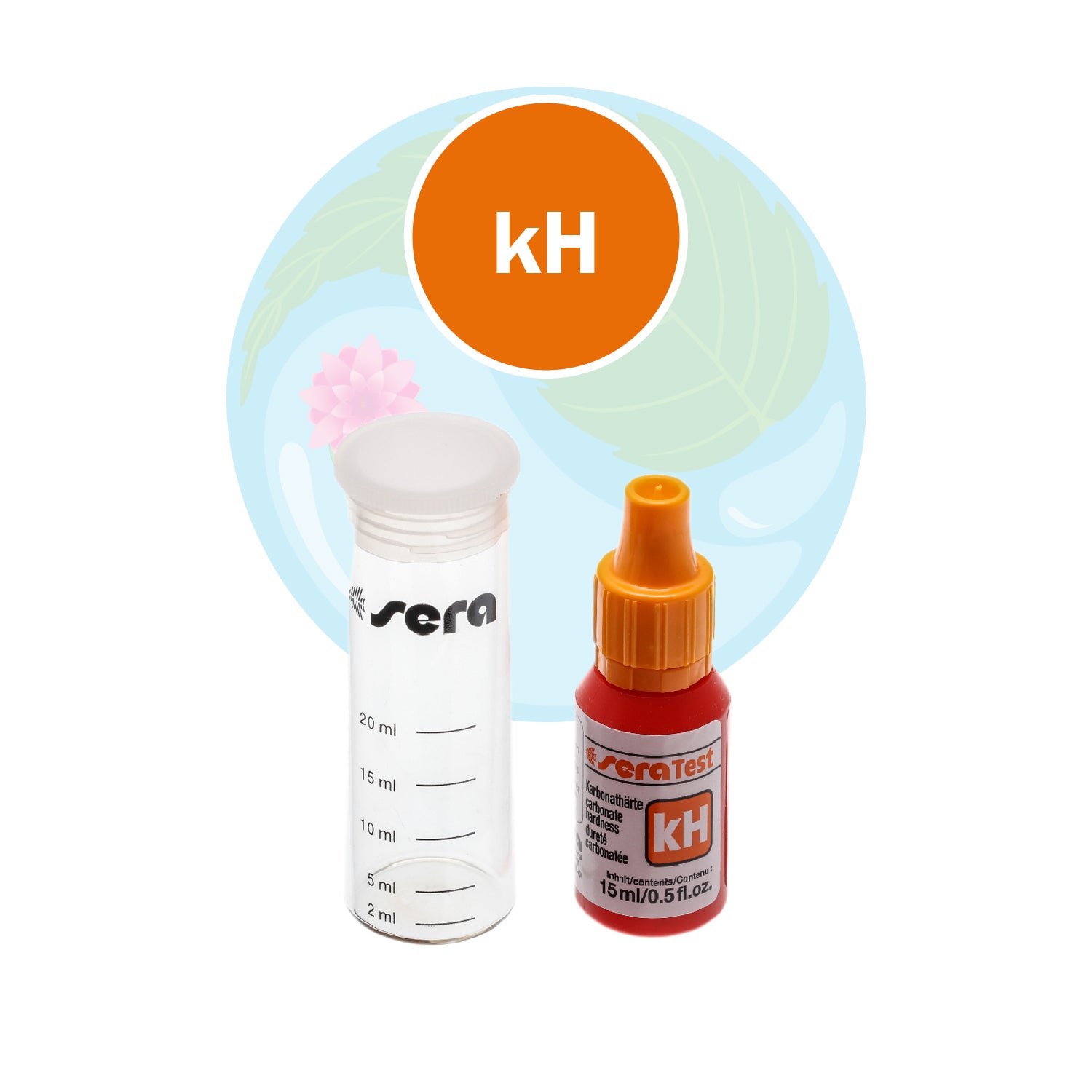
kH - Carbonate Hardness
Carbonate hardness regulates the acidity (pH level) of the pond water. If the carbonate hardness in the pond water is below 8°dkH, the pH level is no longer in the optimal range or is subject to constant fluctuations.
| 0 - 4 °dkH | Resolve causes |
| 5 - 8 °dkH | Apply BioTeich Balance |
| above 9 °dkH | No action required, but monitor regularly. |
How can I prevent future deviations? You should regularly measure the carbonate hardness and correct it immediately with BioTeich Balance when necessary. This ensures that the conditions for algae reduction, the nitrogen cycle, sludge decomposition, and plant growth in the pond are optimal, and that all aquatic life thrives.
NO3 - Nitrate
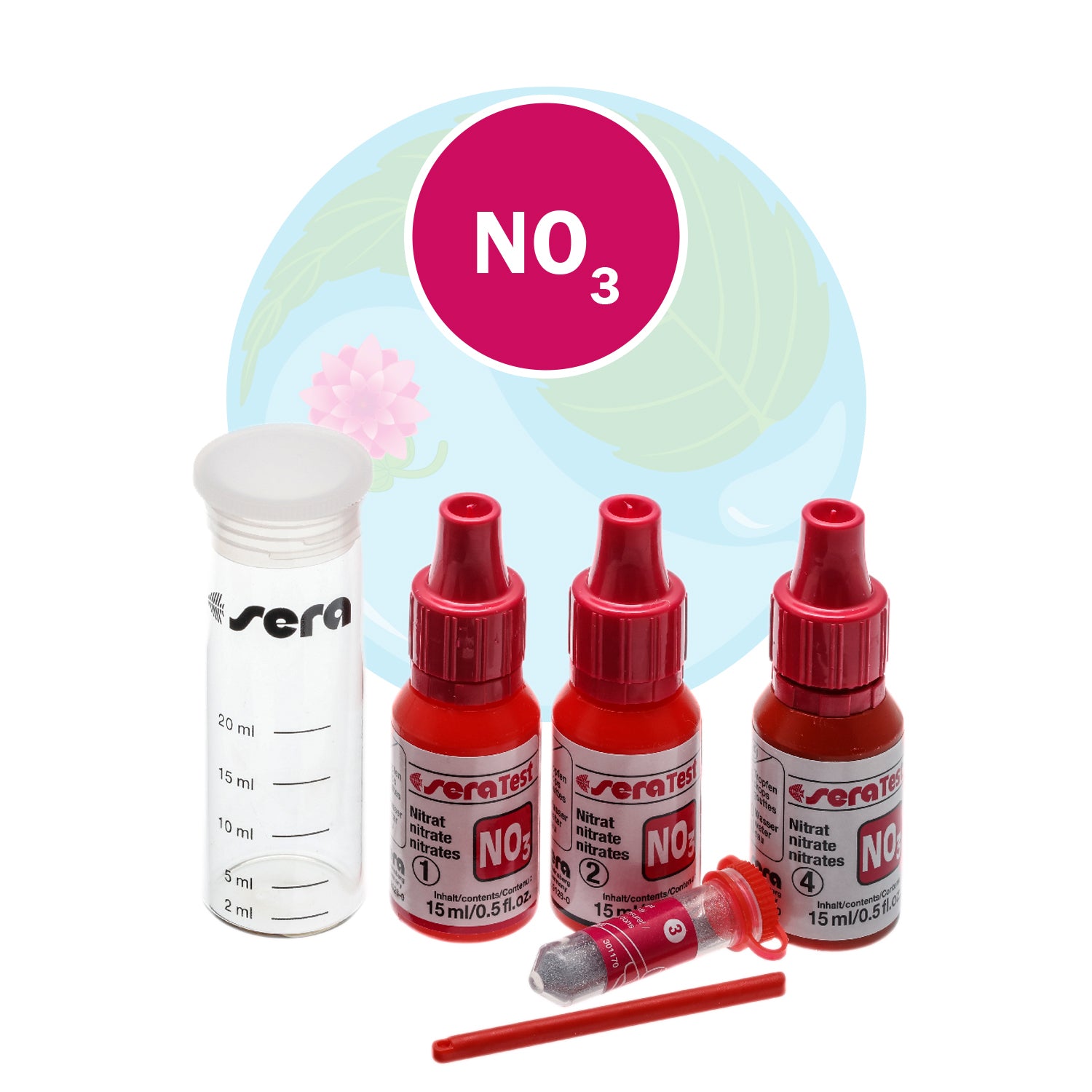
The origin of nitrate is ammonium/ammonia, which is converted by microorganisms into nitrite and then into nitrate. Nitrate is not as dangerous as nitrite and ammonia. However, a nitrate level above 25 mg/l strongly promotes algae growth, leads to green water, and makes fish sick.
| above 100 mg/l | Resolve causes |
| 25 - 100 mg/l | Apply BioTeich Nitrate EX |
| 0 - 10 mg/l | No action required, but monitor regularly. |
What causes a deviation from the optimal value?
A nitrate level that is too high has various causes and results from:
- Filling the pond with nitrate-containing water,
- a lack of microbiology,
- no or insufficient biological filtration,
- too many fish and/or incorrect fish food,
- pond sludge and deposits on stones and plants,
- commercial algae control products,
- saturated zeolite, lava rock, and other coarse-pored stones,
- surface water runoff from lawns, gardens, and slopes,
- fertilization of pond plants and/or fertilization of lawns, gardens, and slopes,
- leaf litter and pollen,
- environmental nutrient input from rain and wind, etc.
How can I prevent future deviations?
You should:
- resolve any existing causes,
- only fill your pond with low-nutrient water,
- run your pump-filter system without a UVC lamp around the clock,
- use BioTeich MAXIMUM and BioTeich Aktiv,
- add more aquatic plants.
PO4 - Phosphate
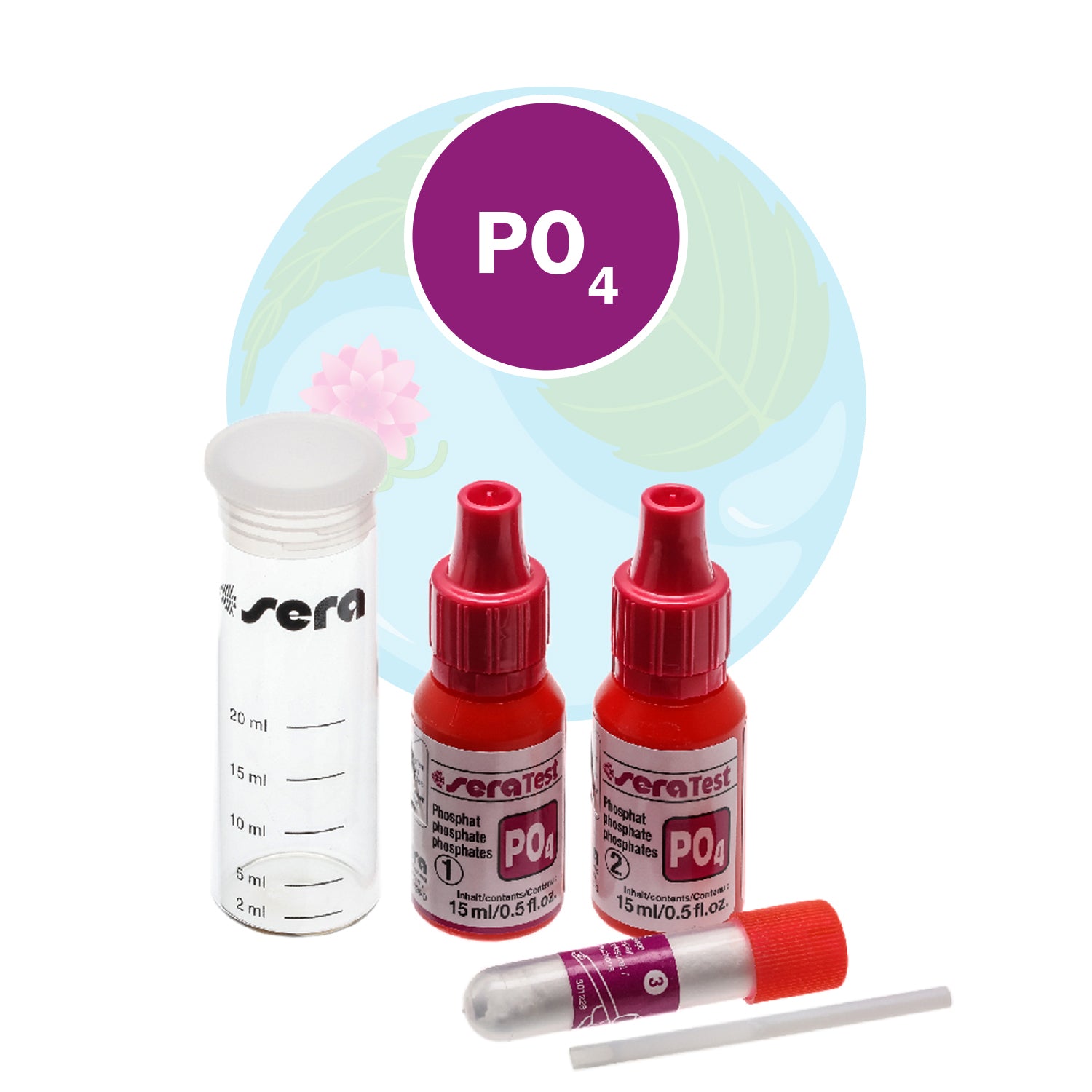
Phosphate is only absorbed by plants in the pond as a nutrient — however, an excess serves as the main food source for unwanted algae. Algae growth can intensify at a phosphate level of 0.1 mg/l or higher.
| above 1.0 mg/l | Resolve causes |
| 0.1 - 1.0 mg/l | Apply BioTeich Phosphate Akut |
| 0.0 mg/l | No action required, but monitor regularly. |
What causes a deviation from the optimal value?
A phosphate level that is too high has various causes and results from:
- Filling the pond with phosphate-containing water,
- a lack of microbiology,
- no or insufficient biological filtration,
- too many fish and/or incorrect fish food,
- pond sludge and deposits on stones and plants,
- commercial algae control products,
- saturated zeolite, lava rock, and other coarse-pored stones,
- surface water runoff from lawns, gardens, and slopes,
- fertilization of pond plants and/or fertilization of lawns, gardens, and slopes,
- leaf litter and pollen,
- environmental nutrient input from rain and wind, etc.
How can I prevent future deviations?
You should:
- resolve any existing causes,
- only fill your pond with low-nutrient water,
- run your pump-filter system without a UVC lamp around the clock,
- use BioTeich MAXIMUM, BioTeich Phosphate Converter, and BioTeich Aktiv,
- add more aquatic plants.
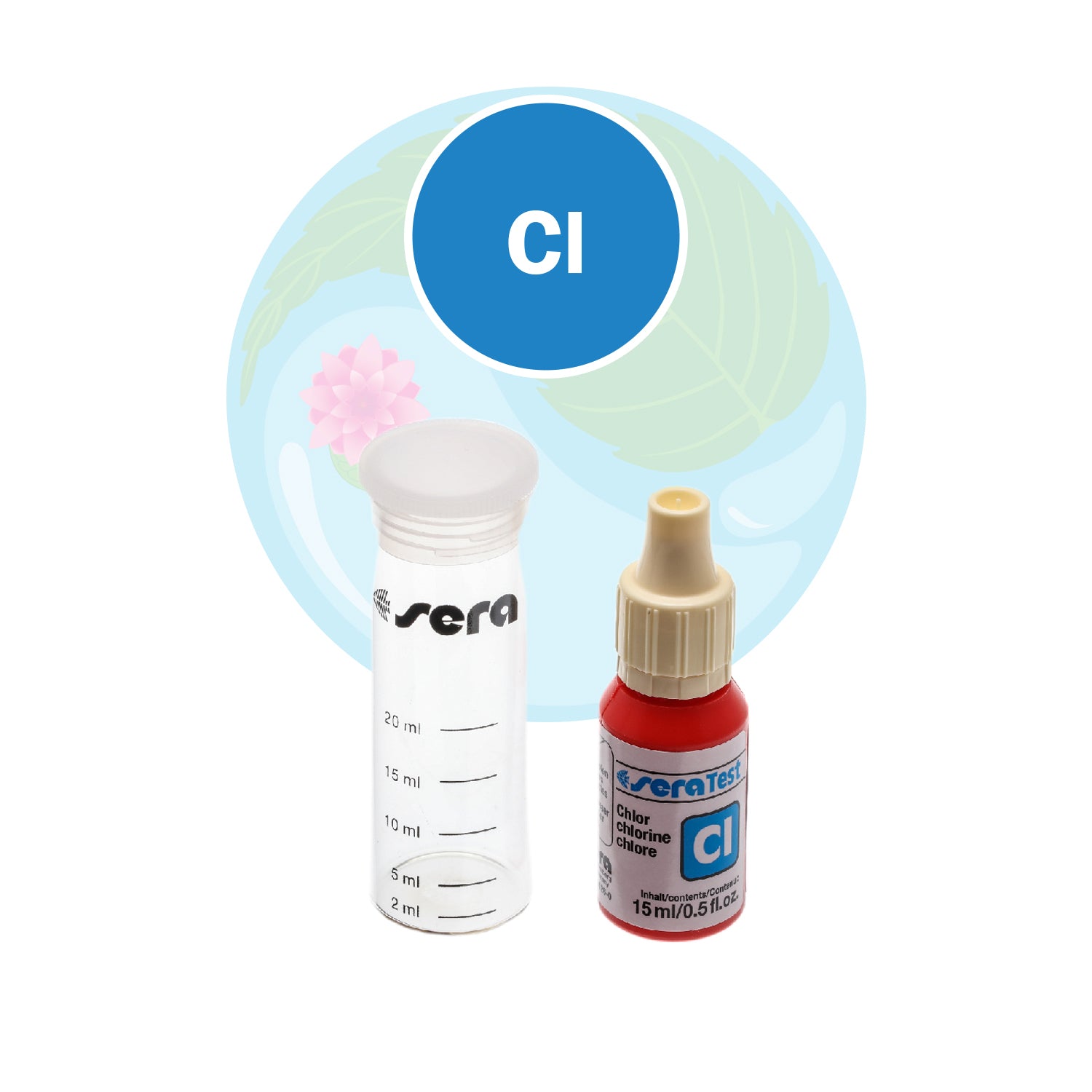
Cl - Chlorine
Chlorine is a very strong disinfectant and destroys the entire pond biology. For all pond life and water-purifying microorganisms, a chlorine level above 0.0 mg/l is toxic and inevitably leads to death.
| above 0.3 mg/l | Resolve causes |
| 0.02 - 0.3 mg/l | Apply BioTeich Vital |
| 0.0 mg/l | No action required, but monitor regularly. |
What causes a deviation from the optimal value?
Chlorine compounds are typically found in tap water and otherwise enter pond water only through the use of products containing chlorine or chlorine compounds.
How can I prevent future deviations?
Use:
- Water with high mineralization (carbonate hardness),
- Water with the fewest algae nutrients (phosphate and nitrate),
- Water with the lowest levels of harmful substances (chlorine, copper, etc.),
- No products containing chlorine or chlorine compounds,
- BioTeich Vital regularly.
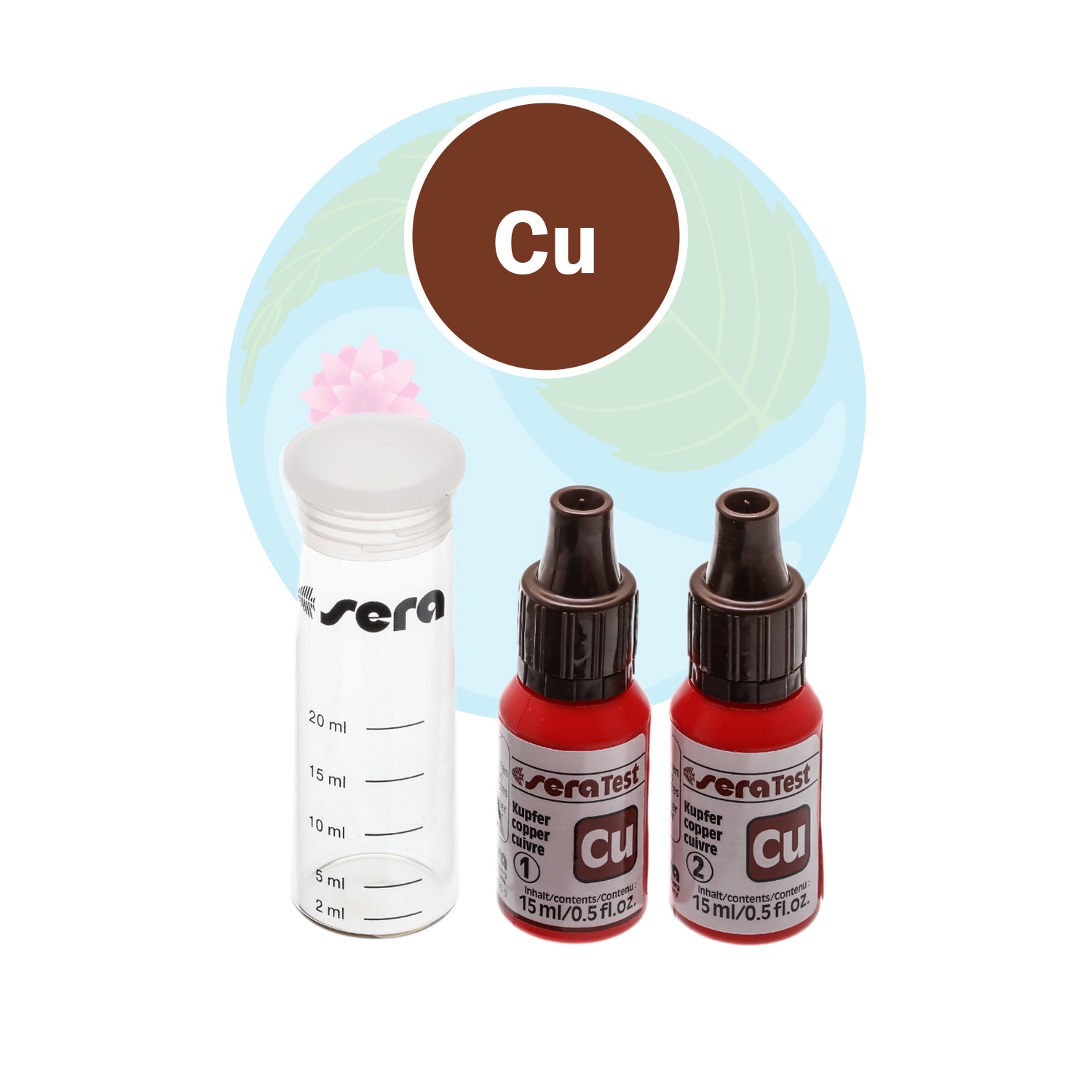
Cu - Copper
Copper is toxic to water-purifying microorganisms and invertebrates. Fish are also very sensitive to copper levels above 0.0 mg/l. The causes of copper accumulation can be diverse, for example, through algae control treatments.
| above 0.3 mg/l | Resolve causes |
| 0.1 - 0.3 mg/l |
Apply BioTeich Vital and BioTeich Phosphate Converter |
| 0.0 mg/l | No action required, but monitor regularly. |
What causes a deviation from the optimal value? Copper is present in almost all water and can additionally enter pond water through the use of products and materials containing or made of copper.
How can I prevent future deviations?
Use:
- Water with high mineralization (carbonate hardness),
- Water with the fewest algae nutrients (phosphate and nitrate),
- Water with the lowest levels of harmful substances (chlorine, copper, etc.),
- No copper pipes carrying water,
- No products containing copper-based ingredients (e.g., commercial algae control products),
- Remove any existing copper anode from the pond,
- Apply BioTeich Vital and BioTeich Phosphate Converter regularly.
O2 - Oxygen
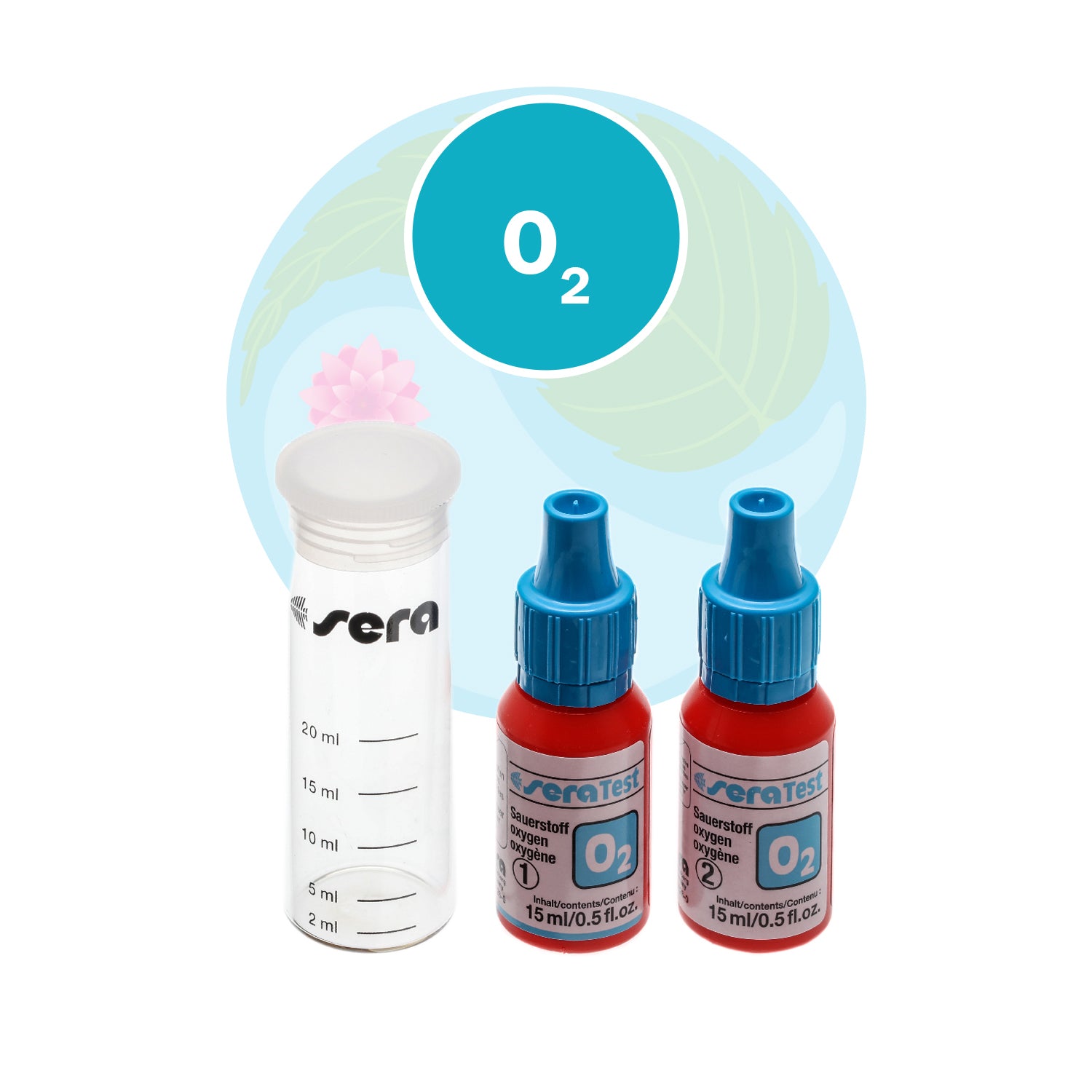
An oxygen content of at least 6 mg/l is necessary for all living organisms and biological processes in the pond and depends on water depth, water movement, water temperature, plant growth, and fish stock.
| 0.0 - 2.0 mg/l | Resolve causes |
| 3.0 - 5.0 mg/l | Apply BioTeich Oxygen Treatment |
| above 6 mg/l | No action required, but monitor regularly. |
What causes a deviation from the optimal value?
A low oxygen level in pond water has various causes:
- Lack of water movement due to a pump-filter system,
- Too few underwater plants,
- An excessive fish population,
- A thick layer of sludge on the pond bottom,
- Existing algae,
- Insufficient water depth in the pond.
How can I prevent future deviations?
You should:
- Resolve any existing causes,
- Run the pump-filter system without a UVC lamp around the clock,
- Use BioTeich MAXIMUM and BioTeich Aktiv,
- Measure the water temperature (above 25°C) more frequently, especially in summer, and correct it if necessary with BioTeich Oxygen Treatment or by adding fresh water from the source determined in step 1.
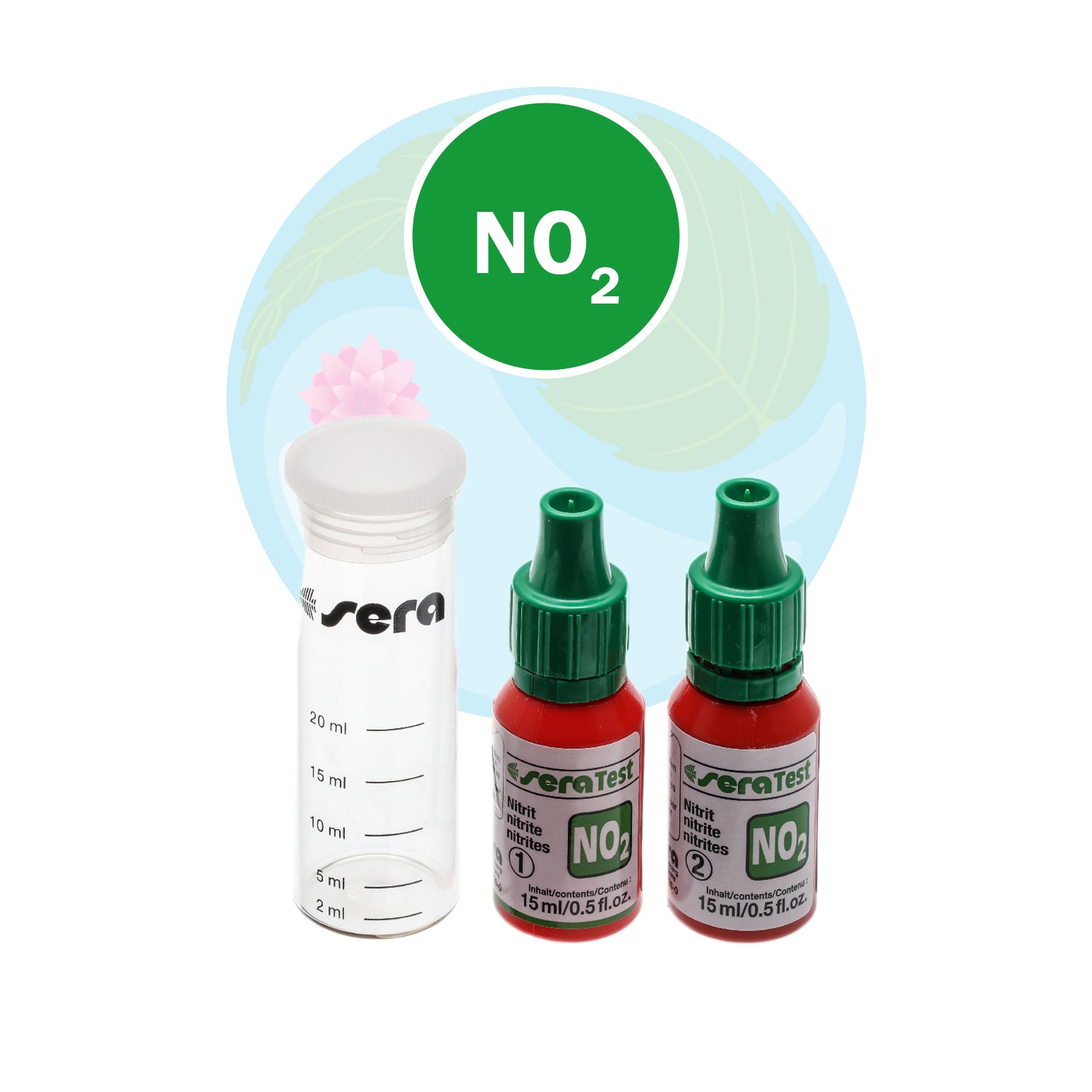
NO2 - Nitrite
Nitrite is a serious fish toxin that is quickly converted into nitrate in a healthy pond. If a healthy biological balance has been established in the pond, no nitrite (0.0 mg/l) should be detectable. If it is detected in the pond, insufficient biological filtration is responsible.
| above 2.0 mg/l | Resolve causes |
| 0.5 - 1.0 mg/l |
Apply BioTeich MAXIMUM and BioTeich Aktiv |
| 0.0 mg/l | No action required, but monitor regularly. |
What causes a deviation from the optimal value?
Insufficient biological filtration, a lack of microbiology, and an excessive fish population are the causes of detectable nitrite levels in pond water.
How can I prevent future deviations?
You should:
- Run the pump-filter system without a UVC lamp around the clock,
- Use BioTeich MAXIMUM and BioTeich Aktiv,
- Reduce the fish population (Step 7) in case of overstocking.
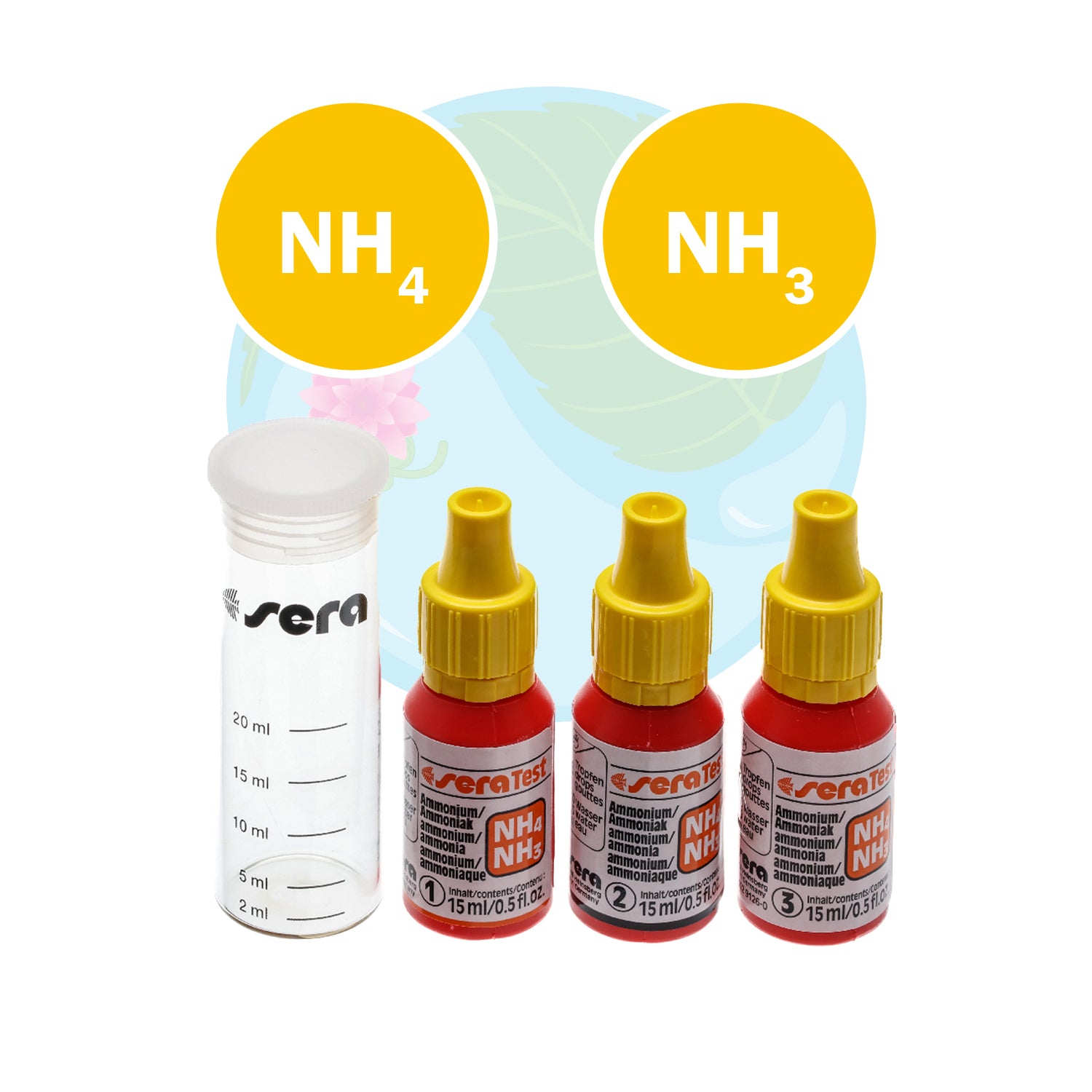
NH4-NH3 - Ammonium-Ammonia
Excess food, fish waste, and dead plant matter pollute pond water with ammonium. In an unfavorable ratio of ammonium to pH level, harmless ammonium can convert into highly toxic ammonia. An ammonia level above 0.5 mg/l can cause poisoning, cramps, gill swelling, bleeding in and on organs, and even the dissolution of gill filaments in fish.
| above 0.53 mg/l | Resolve causes |
| 0.02 - 0.36 mg/l | Apply BioTeich Balance, BioTeich MAXIMUM, and BioTeich Aktiv |
| 0.003 - 0.009 mg/l | No action required, but monitor regularly. |
What should I do now?
You need to measure the ammonium content and the pH level of your pond water to determine the ammonia level using the table below.
| NH4 | pH 7.0 | pH 7.5 | pH 8.0 | pH 8.5 | pH 9.0 |
| 0.0 mg/l | No action required | ||||
| 0.5 mg/l | 0.003 | 0.009 | 0.03 | 0.08 | 0.18 |
| 1.0 mg/l | 0.006 | 0.02 | 0.05 | 0.15 | 0.36 |
| 5.0 mg/l | 0.03 | 0.09 | 0.27 | 0.75 | 1.80 |
| 10.0 mg/l | 0.06 | 0.17 | 0.53 | 1.51 | 3.60 |
What causes a deviation from the optimal value?
Insufficient biological filtration, a lack of microbiology, and an excessive fish population are the causes of detectable nitrite levels in pond water.
How can I prevent future deviations?
You should:
- Run the pump-filter system without a UVC lamp around the clock,
- Use BioTeich MAXIMUM and BioTeich Aktiv,
- Reduce the fish population (Step 7) in case of overstocking.
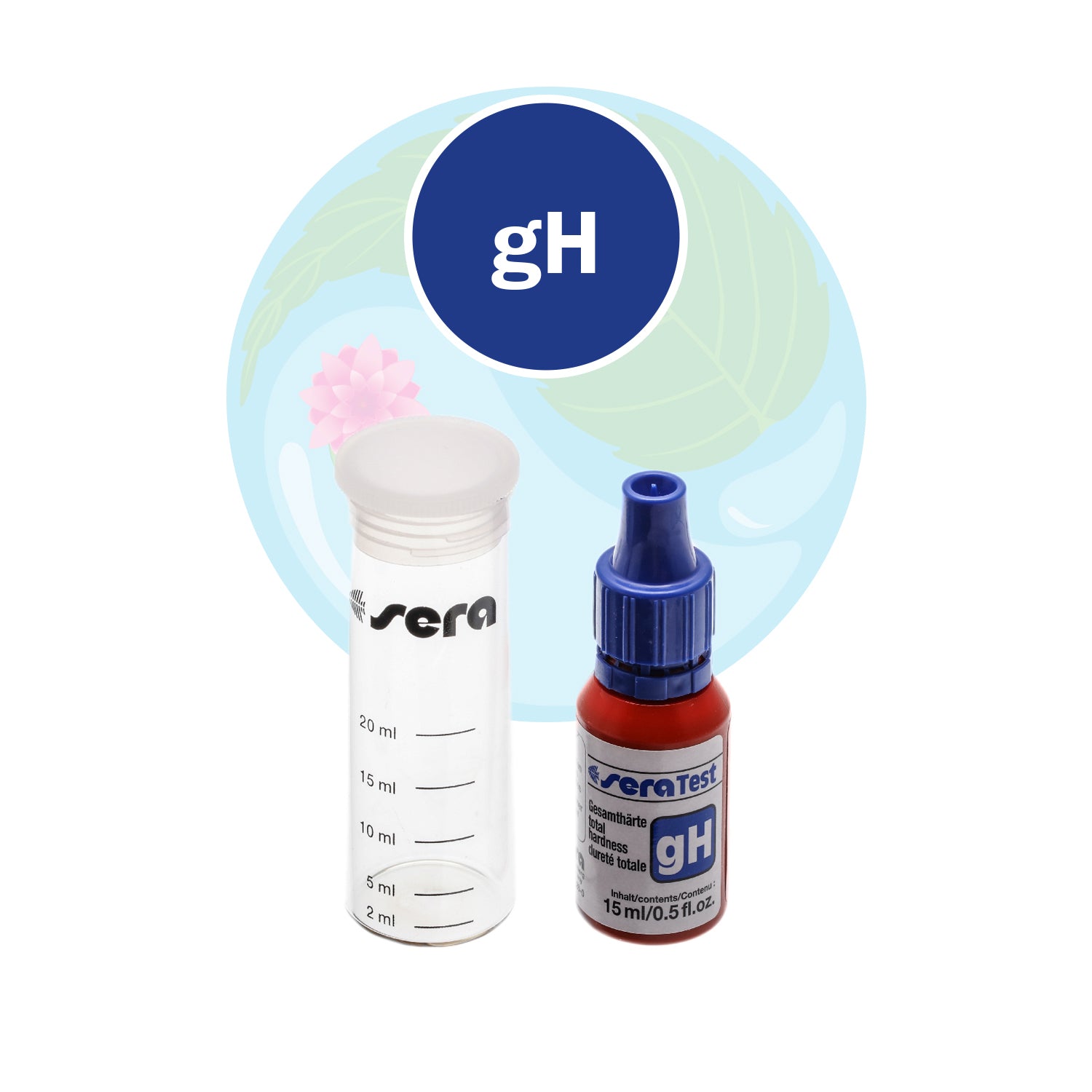
gH - Total Hardness
Total hardness is a measure of the total amount of dissolved minerals (calcium and magnesium) in the water. These minerals are essential for optimally functioning pond biology and healthy growth of plants and fish. The ideal value is between 10° and 15°dgH.
| 0 - 4°dgH | Resolve causes |
| 5 - 9°dgH | Apply BioTeich Balance |
| above 10°dgH | No action required, but monitor regularly. |
What causes a deviation from the optimal value?
Filling the pond with very soft water that contains no mineralization inevitably leads to low total hardness. Rainwater also contains no mineralization and further reduces the total hardness of the pond water.
How can I prevent future deviations?
Use only water with:
- High mineralization (carbonate and total hardness),
- The fewest algae nutrients (phosphate and nitrate),
- The lowest levels of harmful substances (chlorine, copper, etc.).
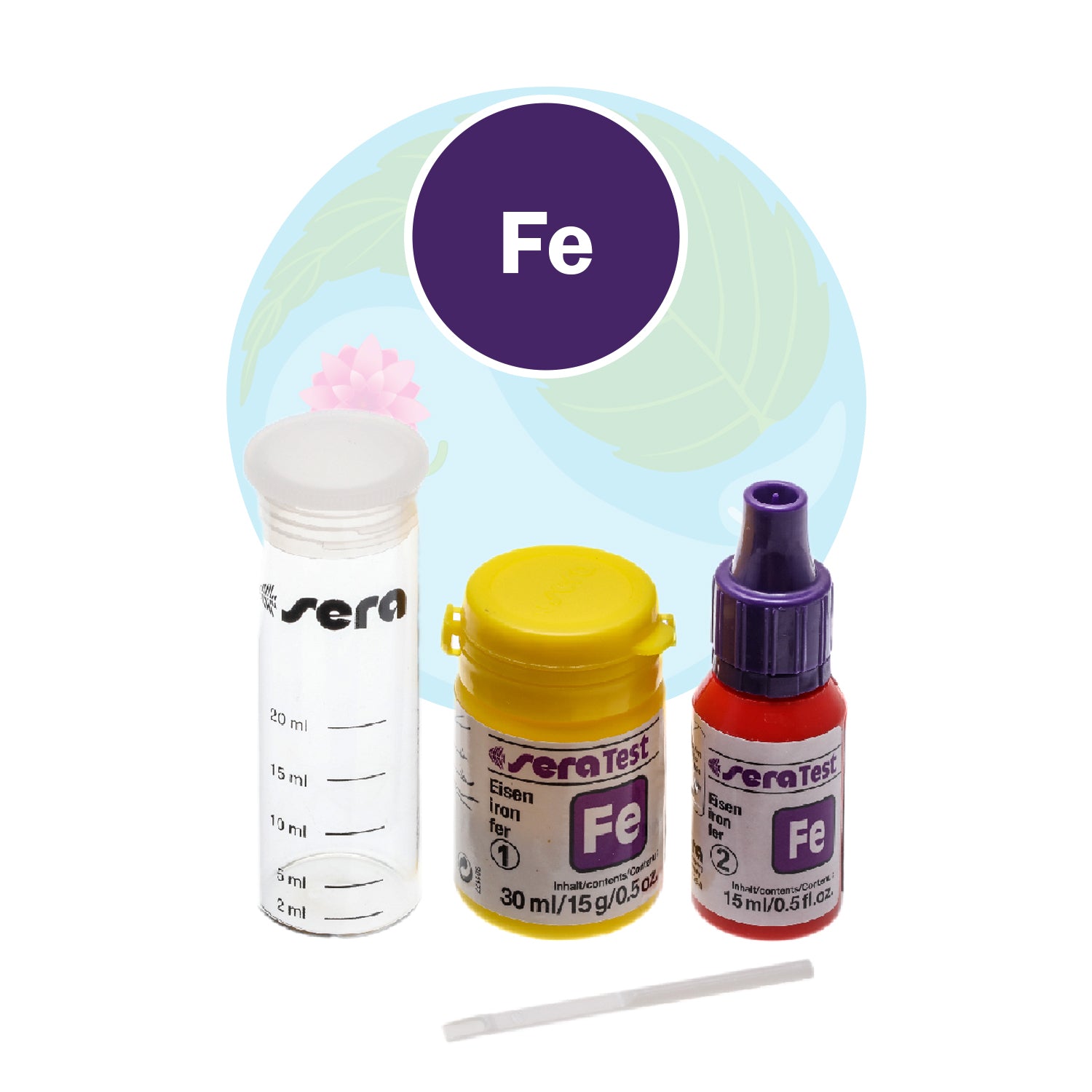
Fe - Iron
Iron is one of many important nutrients for all aquatic plants. Too little iron is detrimental to plants, but too much iron harms fish. To enable optimal plant growth while not harming aquatic life, a maximum iron content of 0.25 mg/l should not be exceeded in the pond.
| above 0.5 mg/l | Resolve causes |
| 0.25 - 0.5 mg/l | Perform a partial water change with low-iron water. |
| 0.0 - 0.25 mg/l | No action required, but monitor regularly. |
What causes a deviation from the optimal value?
Filling the pond with iron-containing water, using products with iron-based ingredients, and having too few aquatic plants increase the iron level in pond water.
How can I prevent future deviations?
Use only water with a low iron content, no products with iron-based ingredients, and ensure there are enough aquatic plants in your pond.
°C - Temperature
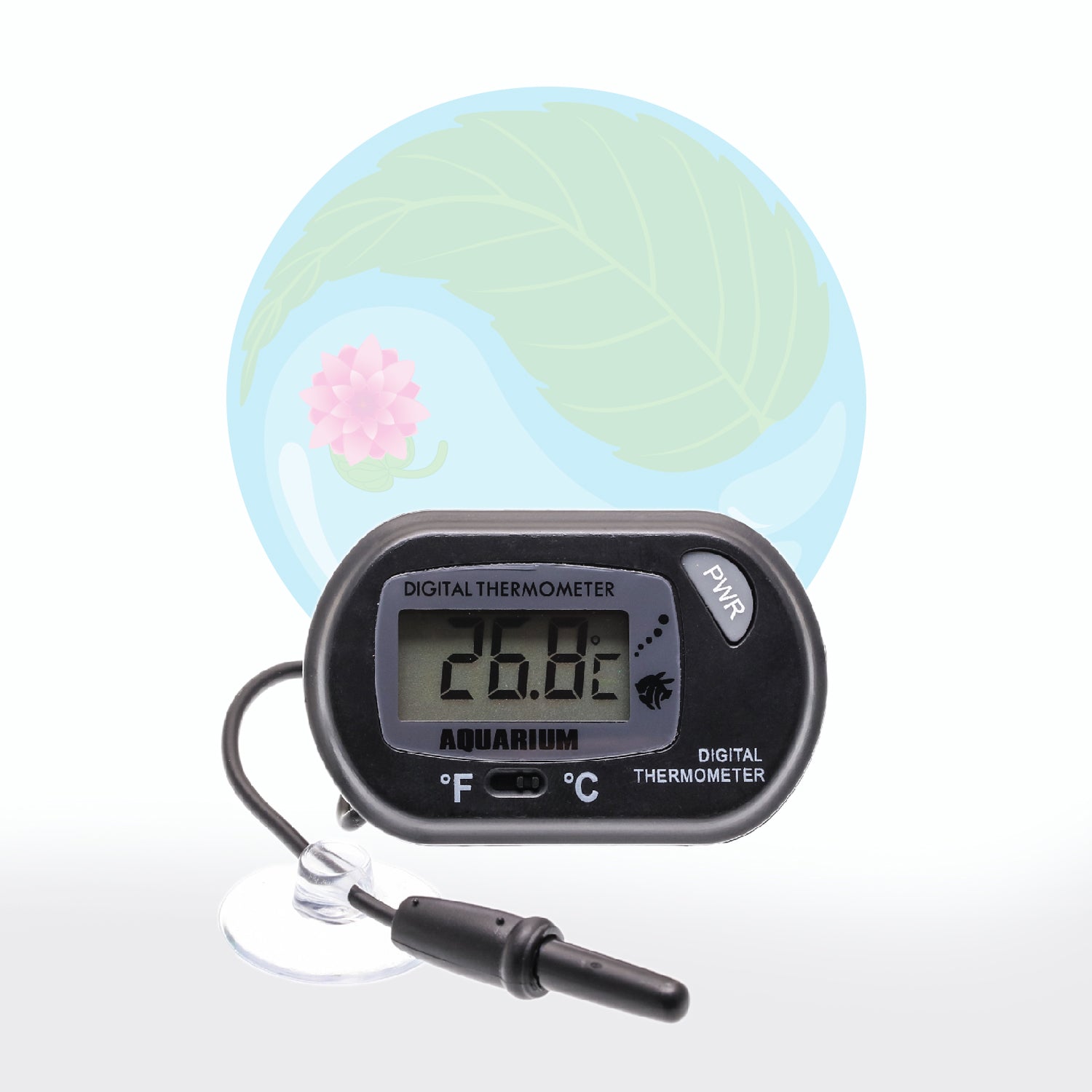
Temperature has a significant impact on the entire pond biology. At water temperatures above 10°C, water-purifying microorganisms begin their work. At temperatures above 20°C, more carbonate hardness is consumed, and above 25°C, the oxygen content in the pond water decreases.
| below 10 °C |
|
| 10 - 25 °C | With optimal conditions (Steps 1-7):
|
| above 25 °C |
|
Our recommendation:
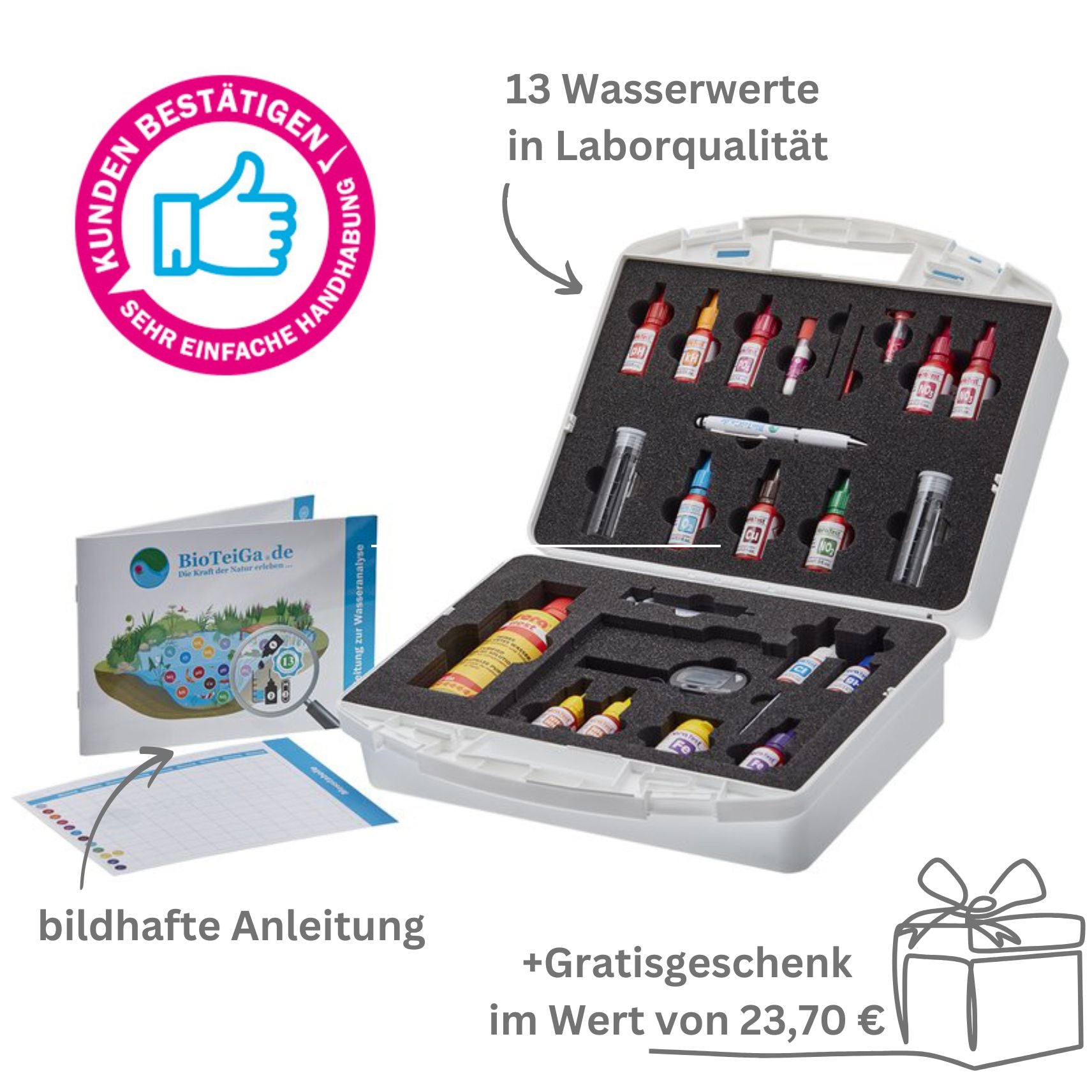
Now test your pond water quickly and easily with the BioTeich Water Analysis Premium Set. The lab-quality results will show you which specific water values you still need to correct.