
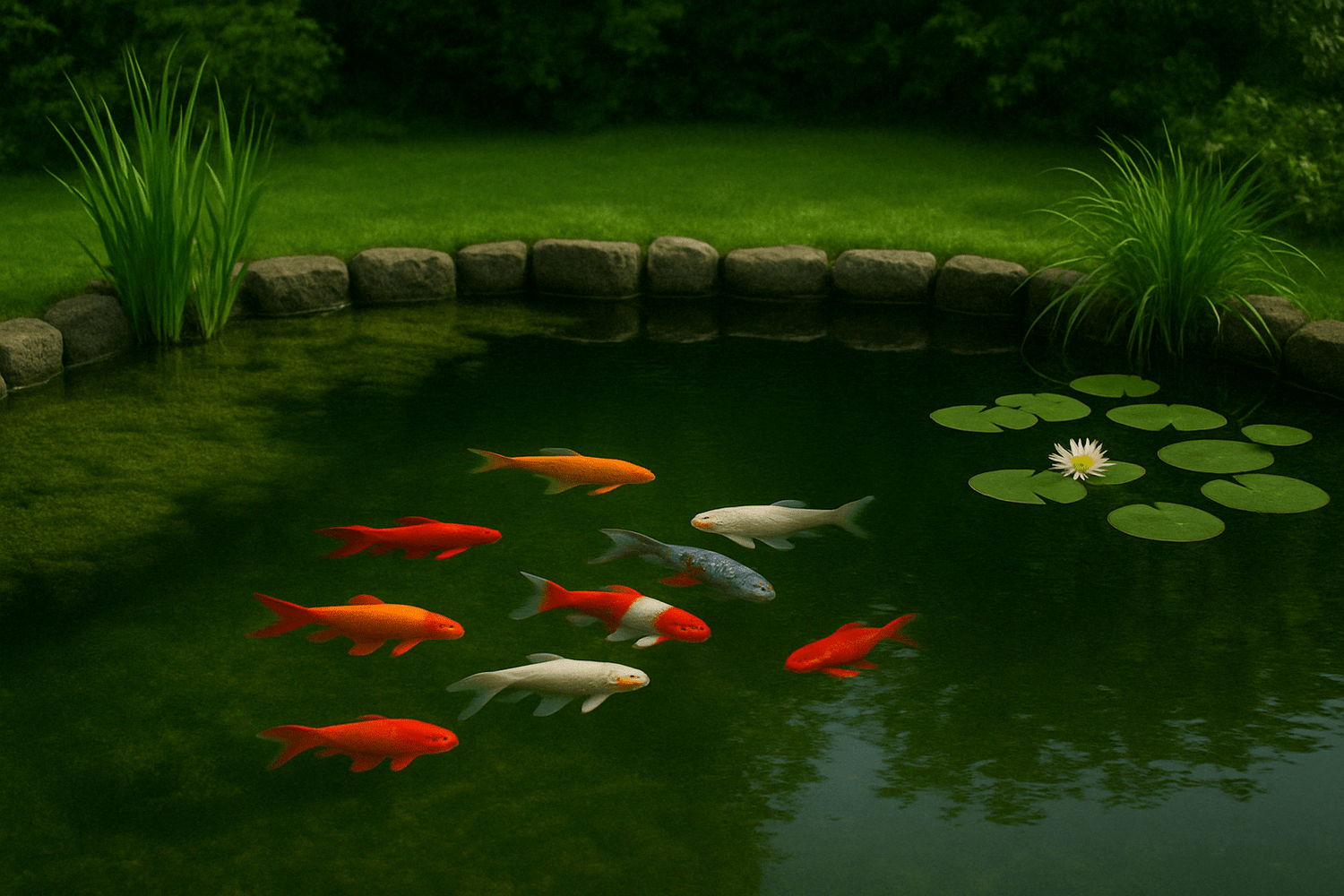
Fish bring life to our ponds and create a natural ambiance. They soothe our senses as they glide healthily and smoothly through clear, algae-free water. However, a species-appropriate habitat and natural nutrition for your fish are essential prerequisites.
Why do too many fish strongly promote algae growth?
In natural lakes, ponds, and pools, fish only settle when the water volume exceeds 200,000 liters. This ensures a long-term biological balance, as the nutrient concentration remains low and oxygen levels stay high.
In a man-made pond, the owner determines the number and size of the fish. Even if only a few different fish are initially introduced, the fish population will grow within just a few months. On the one hand, these fish have no natural predators (predatory fish); on the other hand, they have sufficient food through feeding. When murky, green water then appears at the right time, the fish have absolutely optimal conditions for reproduction. This unnaturally high fish population, with an unnaturally large amount of excrement, inevitably increases the nutrient content in the pond water. As a result, the biological balance is disrupted, and the nutrients are now available for algae growth.
How does unnatural fish food promote algae growth and fish diseases?
Do you always ask yourself which food is best for your fish? The market offers a wide selection, but be careful:
Fish food consists of 80% fishmeal. However, it matters whether this is made from whole fish or just fish waste. The composition of most inexpensive or even high-priced fish food consists of fish waste and low-quality fillers. As a result, they contain much more phosphorus and nitrogen compounds than are truly necessary for a balanced fish diet.
Due to the fish excrement, these ingredients quickly produce a mass of water-soluble phosphates and nitrates! Phosphates and nitrates are, as we know, the main food source for algae in the pond. Up to 25 kg of algae in the pond can result from 500 g of unnatural fish food.
Additionally, fish often suffer from digestive problems and a weakened immune system due to the poor utilization of this food, which can also lead to sudden unexplained deaths.
What should I do now?
For the well-being of your fish, you should first provide them with an optimal habitat. This includes:
-Optimal water values in the pond water (BioTeiGa Practical Handbook Step 2)
-A pump-filter system that runs around the clock
-The use of a filter material (BioTeiGa Practical Handbook Step 3), where active microorganisms can settle and prevent fish toxins from forming (BioTeiGa Practical Handbook Step 4)
To keep the fish in a species-appropriate manner, you should reduce the fish population so that 1 kg of fish has at least 1,000 liters of water available (1 kg of fish corresponds to about one koi or ten goldfish). However, you should consider the growth and reproduction of the fish.
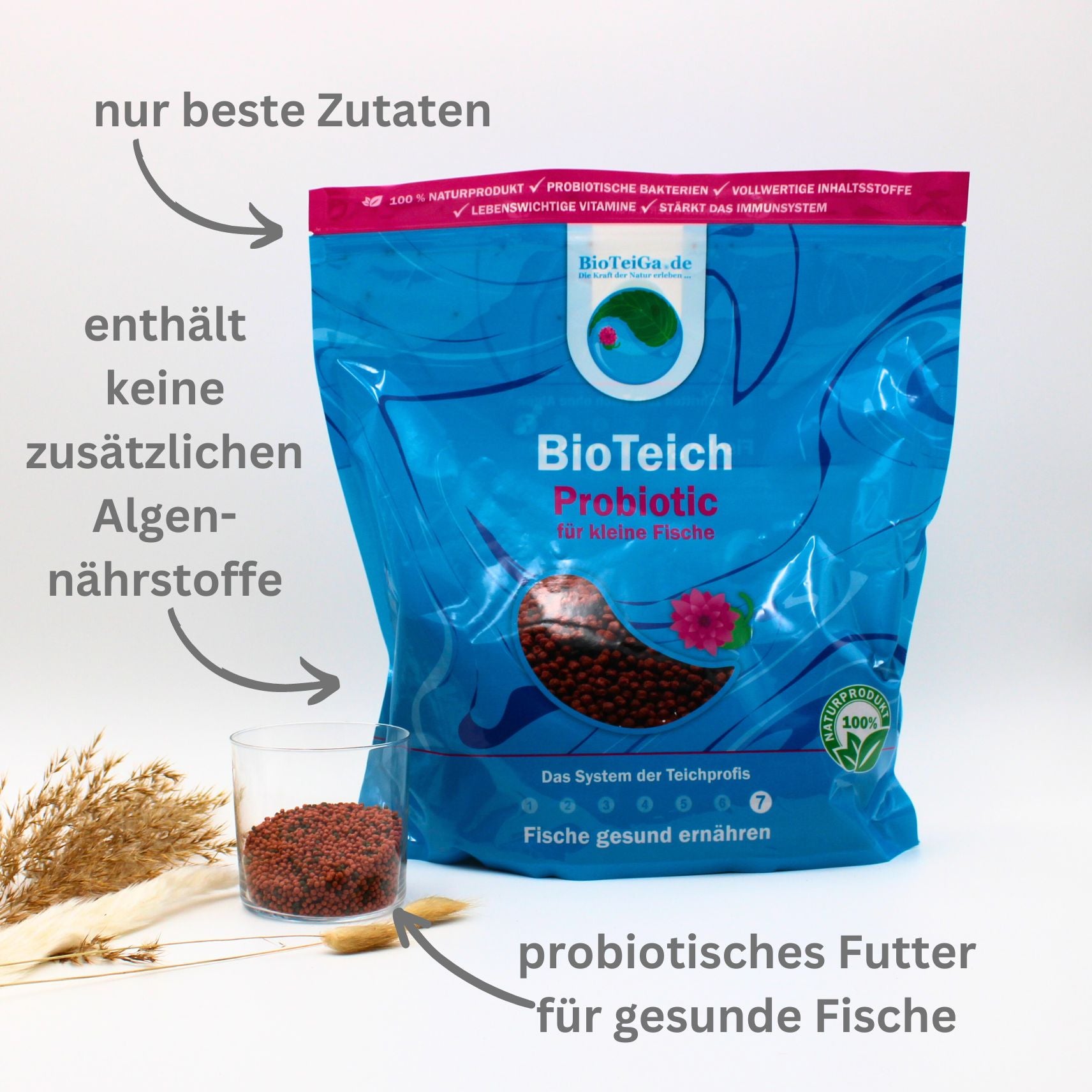
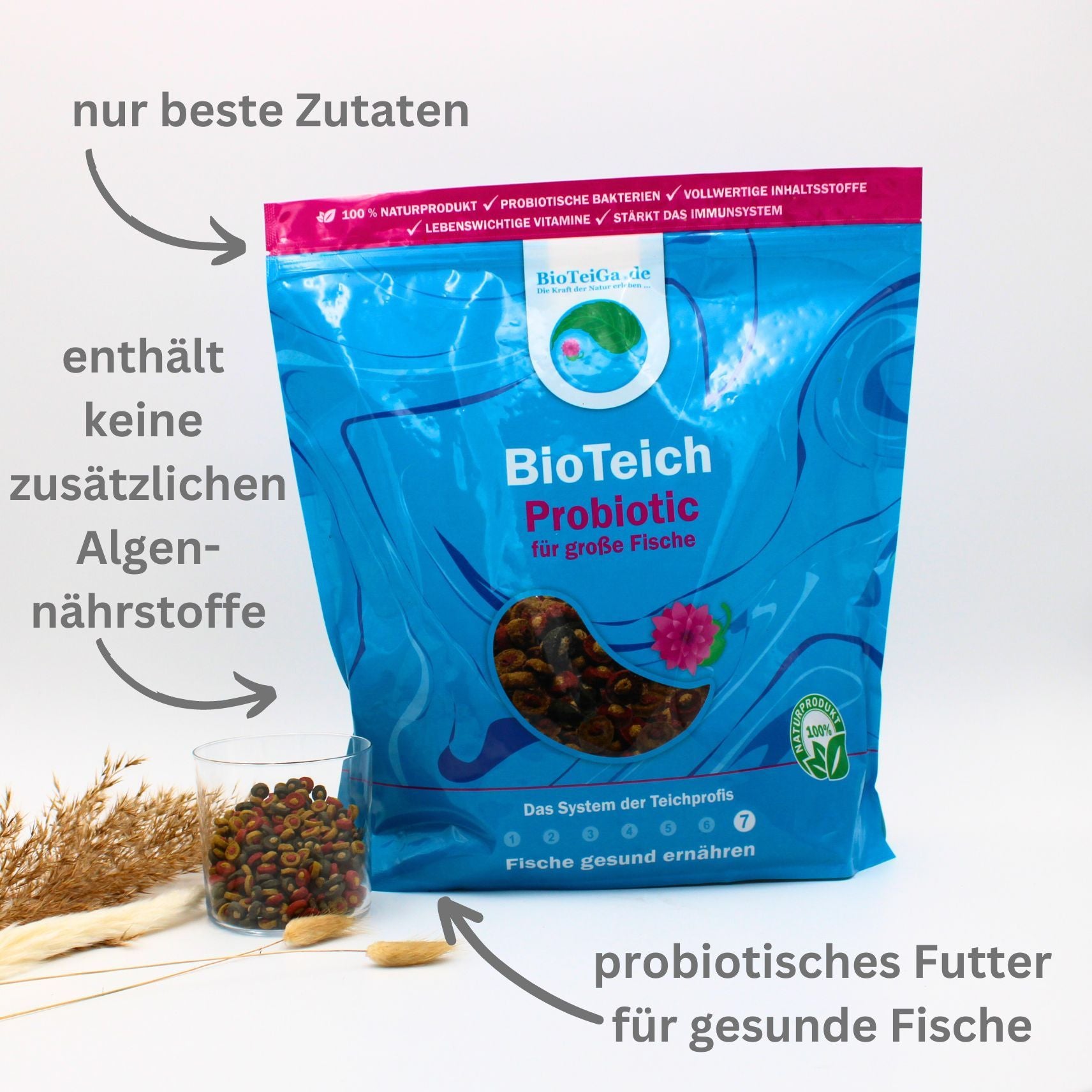
To ensure your fish develop optimally and enjoy the best health, you should only feed them in clear water and a maximum of 3 times per week with natural food containing high-quality and probiotic ingredients (e.g., BioTeich Probiotic). This way, the pond water will not be burdened with added phosphates and nitrates, the food will be completely utilized by the fish, and the intestinal flora and immune system of the fish will be strengthened.