



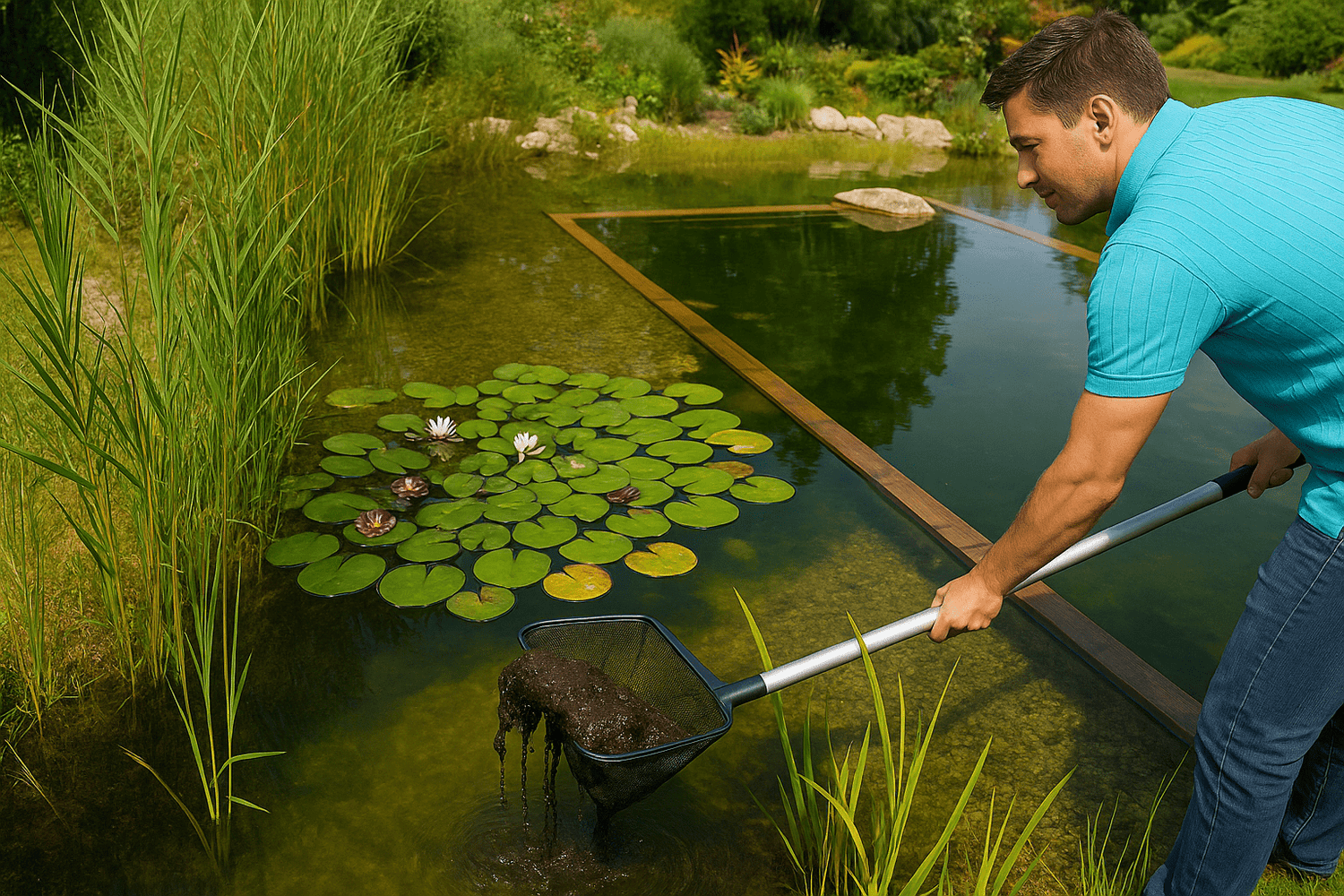
Pond sludge and deposits not only ruin the beautiful appearance of a pond but also contain a vast amount of nutrients that strongly promote algae growth.
Why do sludge vacuums additionally promote algae growth?
Sludge at the pond bottom and deposits between stones and plants form, for example, from the input of leaves, blossoms, pollen, dead algae, dead insects, bird droppings, and in ponds with fish, also from excess fish food and fish excrement. These sink to the bottom due to gravity. All these inputs contain nutrients that strongly promote algae growth. Through natural decomposition processes, nutrient-rich pond sludge is formed. During these processes, unpleasant odors can even develop due to putrefaction gases.
When you remove this sludge with a sludge vacuum, you may see the dirt being visibly sucked up, but you don’t see that the strong turbulence at the pond bottom distributes the nutrients stored in the sludge in a highly concentrated form throughout the pond water. As a result, algae quickly gain accessible nutrients for their growth.
How the right microorganisms permanently break down sludge on their own without stirring up the nutrient-rich sludge layer.
In natural bodies of water, there is always a permanent connection to a stream, lake, or river. This regular water exchange ensures a natural settlement of many different microorganisms.
One group of these microorganisms settles only at the bottom. These specialized microorganisms accelerate the decomposition of organic inputs, minimize putrefaction processes, and continuously break down new dirt and deposits at the water’s base. This prevents the formation of a nutrient-rich sludge layer.


