




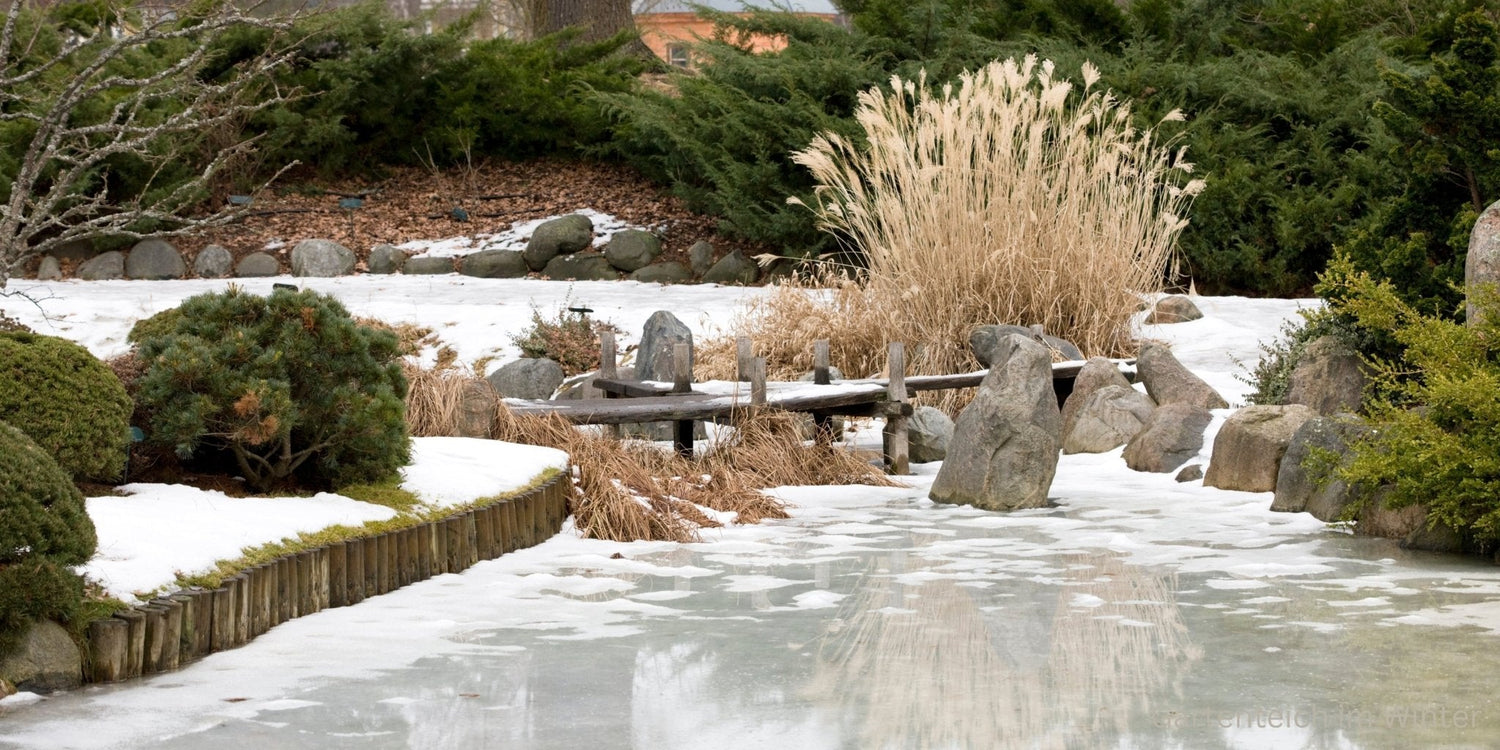
The first cool days and falling leaves – in the autumn months of October and November, tranquility gradually returns to every pond. Now is the time to prepare your pond for the cold season...
What actually happens in the pond when water temperatures drop below 10°C?
- Water plants no longer absorb nutrients and produce hardly any oxygen
- No biological water purification processes or filtration take place
- As a result, fish toxins and nutrients such as phosphate and nitrate remain in the pond water
- Fish no longer take in food and hibernate in the lower water layers
- Seasonal nutrient inputs (e.g., leaves, rain) increase pond sludge
- However, minerals (carbonate hardness) and oxygen continue to be consumed by all pond inhabitants and water plants
What should I do now?
Reduce algae nutrients and optimally mineralize pond water
In autumn and winter, plant nutrients such as nitrate and phosphate are not used due to the lack of plant growth but are available in large quantities for algae.
Used from the beginning of autumn, BioTeich Nitrat EX and BioTeich Phosphat Akut can prevent algae growth and an explosive increase of algae in spring. In the cold season, carbonate hardness and oxygen are primarily consumed by all pond inhabitants and water plants. With BioTeich Balance and BioTeich Sauerstoff-Kur, you ensure optimal mineralization and ideal oxygen levels in your pond over the winter. All required BioTeich products are already compiled in the BioTeich Autumn-Winter Set for you.
Remove pond sludge
If your pond already has a thick layer of sludge, we recommend a thorough one-time cleaning of the pond floor. In this case, you can easily remove the pond sludge and deposits between stones and plants completely with a sludge vacuum.
If the sludge layer in your pond has just been removed or is only a few centimeters high, you can leave the permanent natural cleaning of your pond floor to the special microorganisms in BioTeich Schlamm Stabil.
Skim off leaves and use a pond net
If you stretch a pond net over your garden pond before the leaves fall in autumn, you can save yourself a lot of work. The pond net ensures that flying leaves do not land directly in the water and thus harm the pond water.
Dead leaves and plant parts should definitely be skimmed off regularly. Plant parts rot in the water and release nutrients, which disturb the biological balance in the pond. The result is the formation of foul gases under the ice layer in winter and a strong algae bloom in spring.
Clean and store pumps and filters
Remove pond pumps and filter materials from the water in good time (no biological filtration takes place below 10°C) before the first frost and clean them thoroughly with clear water to remove dirt and deposits. Let the filter materials (foam, BioTeich MAXIMUM, etc.) air-dry and store them in a frost-free place until spring.
Also check the equipment for damage. Then store the pond technology in a frost-free place (e.g., in the basement). Store your pond pump in a bucket of low-lime water to prevent the pump from drying out and important seals from becoming brittle and porous.
Prune plants
If your pond is not deep enough to relocate sensitive floating water plants to ice-free zones, such pond plants can also be placed in cold, frost-free locations, e.g., in a storage room or preferably in a small greenhouse for the winter. Overgrown floating and underwater plants should be thinned out and dead plant parts pruned. Please tie grasses together so that the wind cannot push them underwater.
Cut back your reeds, cattails, and other pond plants with tubular stems only enough so that they can still ensure gas exchange in the pond like straws above the surface of a frozen pond. If you do not have any stem plants, bamboo tubes from the garden center offer an inexpensive alternative.
Stop feeding the fish
Completely stop feeding the fish (except for sturgeon and koi in winter basins) when the water temperature drops below 10°C, as the metabolism of the fish slows down and the ingested food can no longer be properly digested – the result: your fish will perish.


