
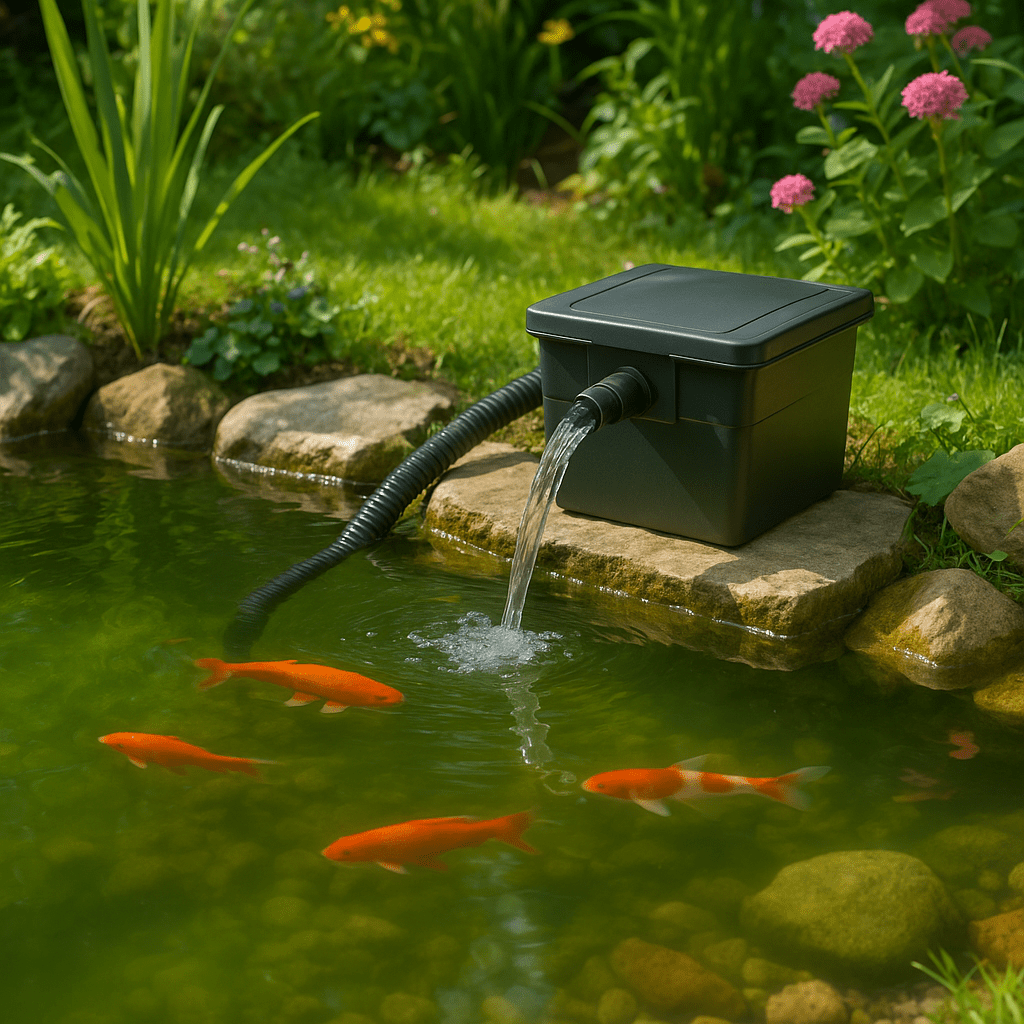
The pond water is transported by a pump, which should preferably be placed at medium depth in the pond, to the filter inlet. A biological filter usually has several cleaning stages, which can consist of various materials. In the first cleaning stage, coarse dirt is mechanically retained (by grates, brushes, or large-pored sponges). All further cleaning processes are typically only biological.
Biological means that it is not the materials inside the filter that clean the water, but rather these various materials (sponges, plastic parts, natural stones, etc.) provide a habitat for different microorganisms. And only these microorganisms living on and in the various materials biologically clean the pond water as it flows through – they feed on the dirt particles in the water and carry out important biochemical conversion processes.
In the oxygen-rich (aerobic) zone, special microorganisms (nitrifiers) convert ammonium and ammonia into nitrite. In the oxygen-free (anaerobic) zones, which are barely or not at all present in most filter systems, denitrifiers convert nitrite into nitrate. The nitrogen compounds released in the process are released into the air. If this process cannot take place or only minimally, these fish toxins remain in the pond water.
The 3 most important rules for proper use of biological filters in ponds
Rule 1: Never turn off the filter
From water temperatures of 10 °C, the cleaned pump and the cleaned filter are put into operation and must not be turned off until the end of the season (water temperature permanently below 10 °C)!
Why? The bacteria working in the filter die within 2 hours if they are not constantly supplied with water and oxygen. Intermittent shutdowns – possibly to save electricity – cause the microorganisms and bacterial cultures to die. Not only does this prevent sufficient bacterial strains from settling: every time the system is restarted, toxic ammonia and unprocessed nitrites are flushed into the pond, adding to the burden.
Therefore, the rule is: No matter which filter is used, it must run around the clock. In addition, the oxygen supply through the filter must be ensured, especially at night, because due to the lack of photosynthesis (as there is no sunlight at night), plants (and algae) consume oxygen at night.
To achieve maximum filter performance with all relevant microorganisms in a short time, we recommend adding 2 g of BioTeich Aktiv per 1,000 litres of pond water at the start of the season.
Rule 2: Do not thoroughly clean the filter during the season
The filter must not be thoroughly cleaned during the pond season!
Since the countless microorganisms have settled in the filter, a thorough cleaning during the pond season would be like an immediate eviction of the useful filter inhabitants.
This means: You can thoroughly clean the coarse filter (mechanical cleaning stage at the filter inlet) from time to time, and if the biological filter part is very dirty, you can also gently squeeze or compress the filter sponges – but no more than that.
If the pump supplying the filter with water is not placed at the bottom of the pond but at least 20 cm higher (or suspended), it will not suck up sludge from the bottom, and your filter will barely get dirty even in the coarse filter zone.
Additional benefit: The colder, oxygen-rich pond water in the lowest water layer is preserved – and your fish have a welcome retreat, especially on hot summer days.
Rule 3: Permanently remove the UVC lamp
Any existing UVC lamp must be permanently removed!
An existing UVC lamp and copper anode must remain permanently switched off when using these highly active bacteria to prevent the useful microorganisms from being killed. UVC light cannot distinguish between beneficial and harmful bacteria – it simply destroys them all.
A self-regulating pond biology can only develop in the presence of all natural microorganism strains and without any life-killing measures.
Now you know how biological filter systems work and which simple measures help maintain the important microbiology in the pond.
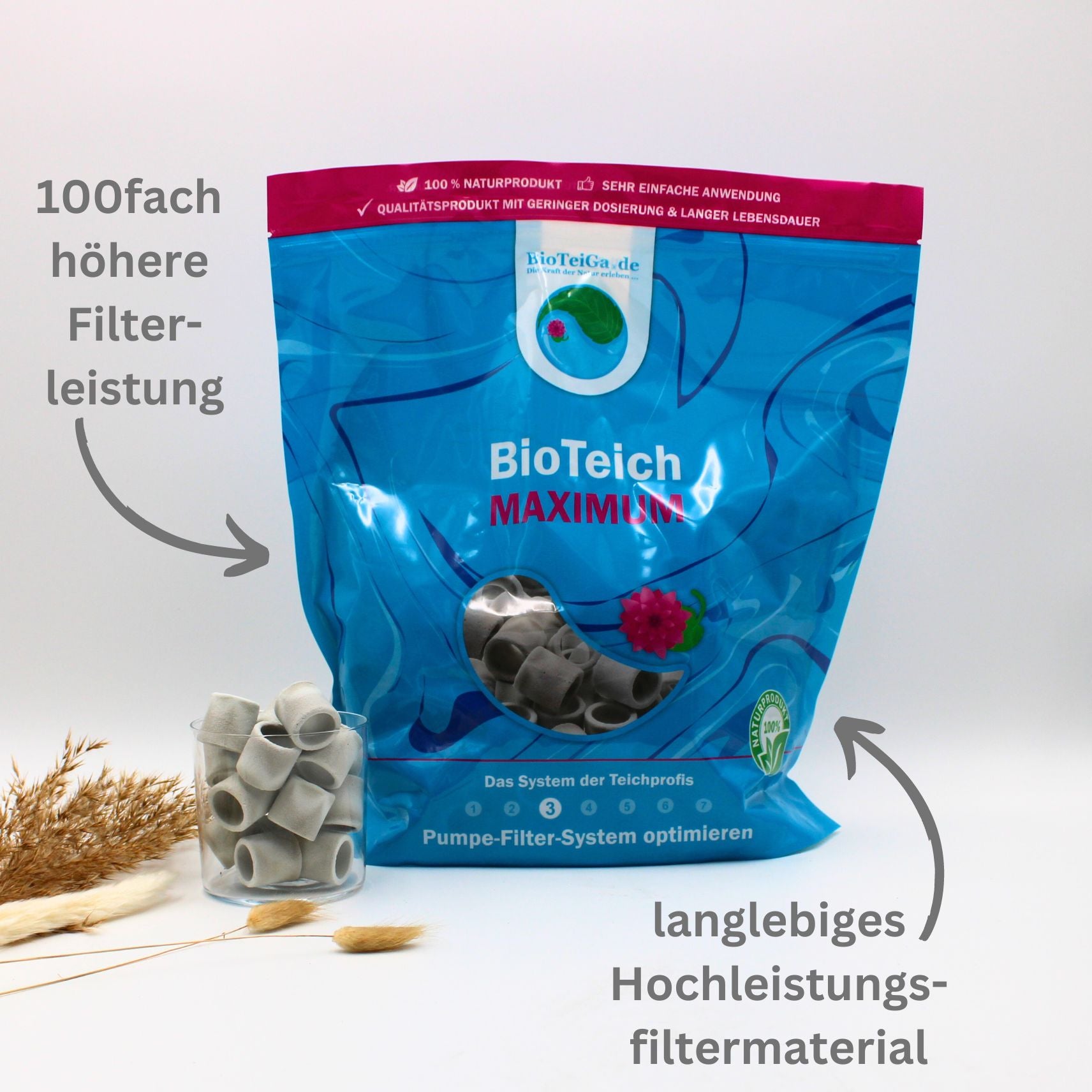
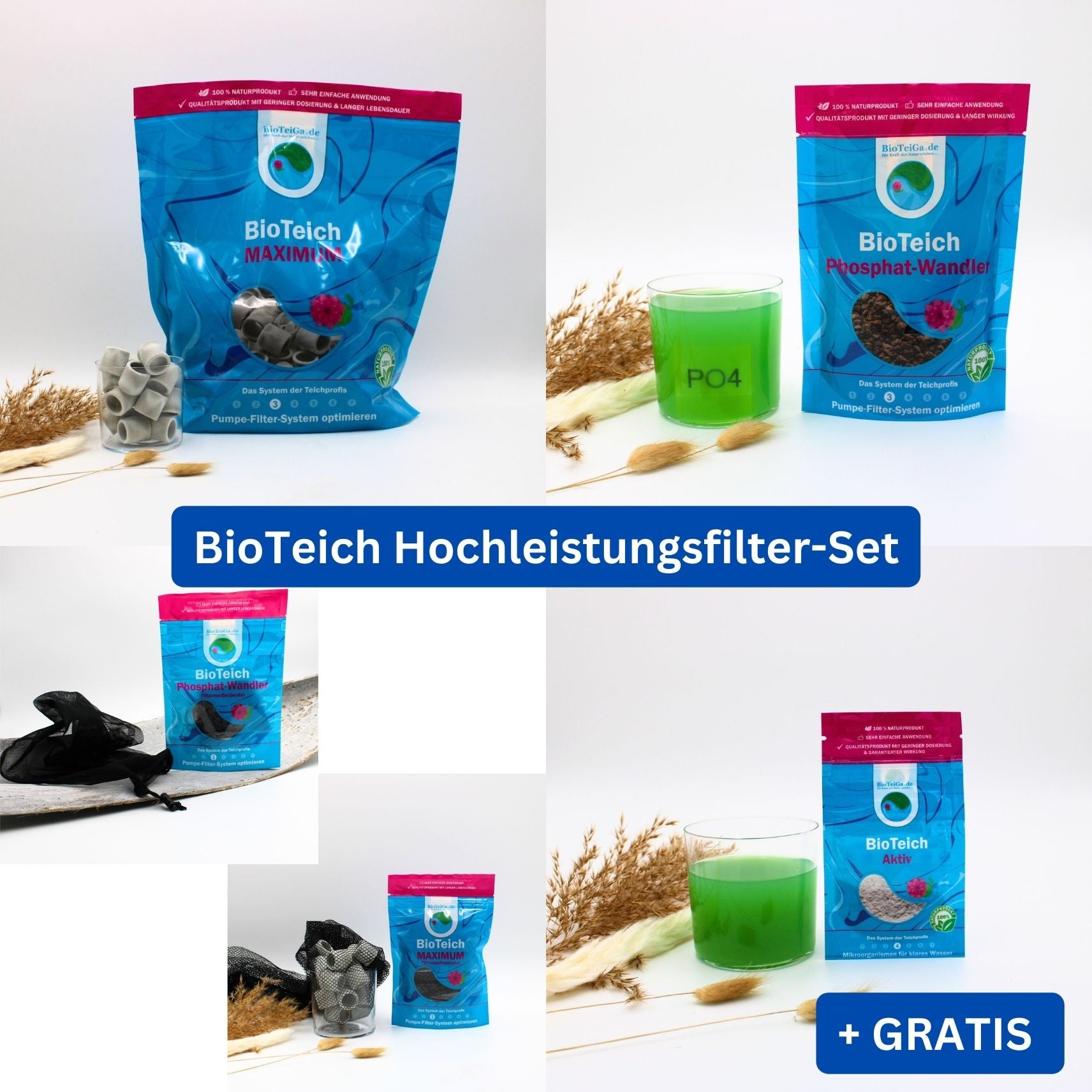
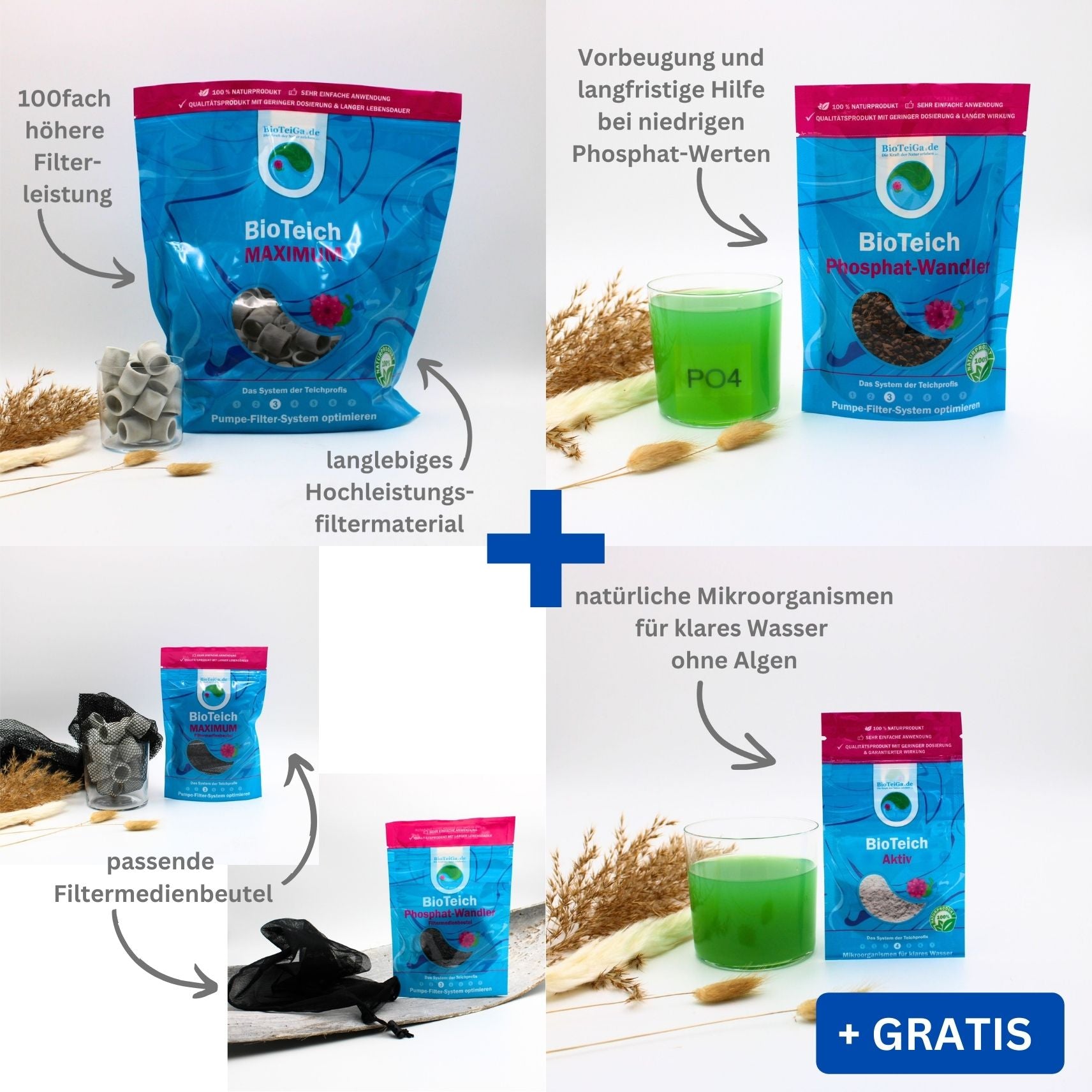
If you now replace your conventional filter material with high-performance filter material BioTeich MAXIMUM – even if it’s just a quarter or half – you can be sure that any existing microorganisms can multiply to their full potential. This way, you can enjoy your pond with even less maintenance and care effort.